
2026 Toyota C-HR EV vs 2025 Model: What Has Changed?
The 2026 Toyota C-HR EV is about to hit the market, but it’s no longer the familiar fuel-powered car. Toyota has completely abandoned its conservative approach. The 2026 C-HR EV is a pure electric crossover built on a dedicated electric platform. Compared to the 2025 model (which, in reality, was still mainly a fuel or hybrid version in most markets, and was even discontinued in North America for a time), it feels like a product from a completely different era.
Based on official information released for the U.S. market, this article will provide a detailed interpretation of the core differences between the 2026 and 2025 models from multiple dimensions, including powertrain, design, and technology. If you’re interested in the “2026 Toyota C-HR EV” and curious about how it differs from the old model sold globally, this article will offer you clear answers.
2025 Toyota C-HR (Fuel/Hybrid): Taking the second-generation C-HR sold in Europe and some Asian markets as an example, it primarily offers 1.8L and 2.0L hybrid systems. While the hybrid version provides a smooth driving experience, its performance is merely average. The 2.0L hybrid version typically accelerates from 0 to 100 km/h in over 8 seconds. It’s a competent city runabout, but it’s definitely not associated with the word “sporty.”
2026 Toyota C-HR EV (All-electric): This time, Toyota has directly transformed it into a “pocket rocket.” In the U.S. market, the 2026 C-HR EV comes standard with a dual-motor all-wheel-drive system, delivering a maximum combined output of 338 horsepower. The official 0-60 mph (0-96 km/h) acceleration time is just 4.9 seconds. This performance not only far surpasses any previous generation of the fuel-powered C-HR but is also quicker than Toyota’s own sports coupe, the GR86. The 2026 C-HR EV has completely shed its “slow” label.
2025 C-HR (Hybrid): Built on the TNGA-C (GA-C) platform, an architecture primarily designed for fuel and hybrid vehicles.
2026 C-HR EV: Switches to the e-TNGA pure electric platform (specifically e-TNGA 2.0). This means it was designed as an electric vehicle from the start. The battery is placed flat under the floor, resulting in a lower center of gravity and more balanced front-to-rear weight distribution, laying the foundation for excellent handling. After test drives, review outlet Carscoops noted that its chassis performance is “composed, predictable, and confidence-inspiring.”
2026 Toyota C-HR EV (U.S. Market): Equipped with a 74.7 kWh battery pack. According to EPA standards, the range for the entry-level SE model (with 18-inch wheels) is 287-290 miles (approximately 462-467 km). The higher-trim XSE model, equipped with larger 20-inch wheels, sees a slight decrease in range to around 273 miles (439 km).
More importantly is the charging. The 2026 C-HR EV comes equipped with the NACS (North American Charging Standard) port. This means that starting in 2026, owners in the U.S. and Canada can directly access the Tesla Supercharger network without needing an adapter. Using DC fast charging, charging from 10% to 80% takes approximately 30 minutes.
In contrast, while the 2025 hybrid C-HR obviously doesn’t require charging, its pure electric range is virtually zero.
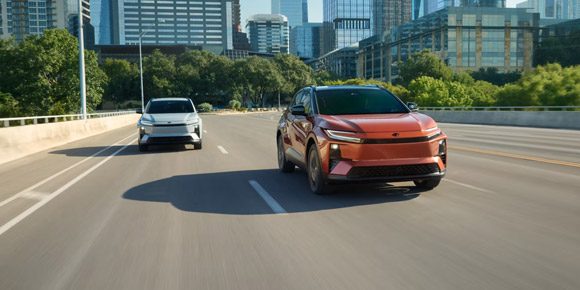
In terms of design, the 2026 model continues the C-HR lineage’s avant-garde style, but with sharper details.
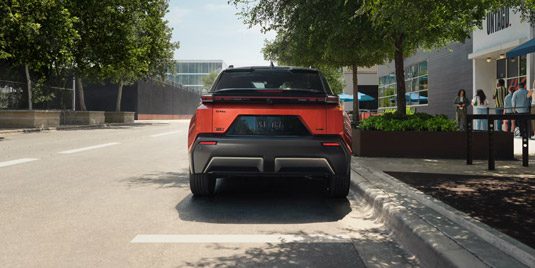
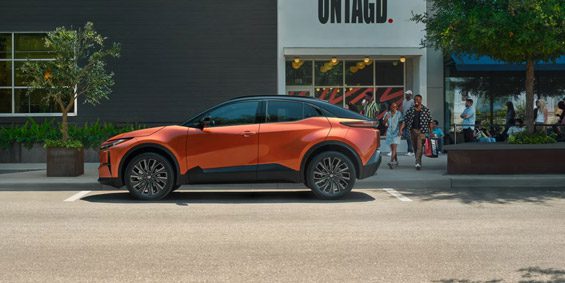
Exterior: The 2026 model adopts Toyota’s latest “Hammerhead” front-end design, with lines that are much sharper and lower than the old model. Paired with distinctive C-shaped headlights, the overall look resembles a “cheetah that just strolled back from the track.” It retains the signature hidden rear door handles and coupe-like lines.
Interior: This is the most significant upgrade area for the 2026 model. It features a new 14-inch central touchscreen, similar to those in the bZ series, running Toyota’s latest Audio Multimedia system with support for wireless Apple CarPlay and Android Auto. The addition of a fully digital instrument cluster, dual wireless phone charging pads, and 64-color ambient lighting gives the cabin a sense of technology and luxury that completely surpasses the 2025 model.


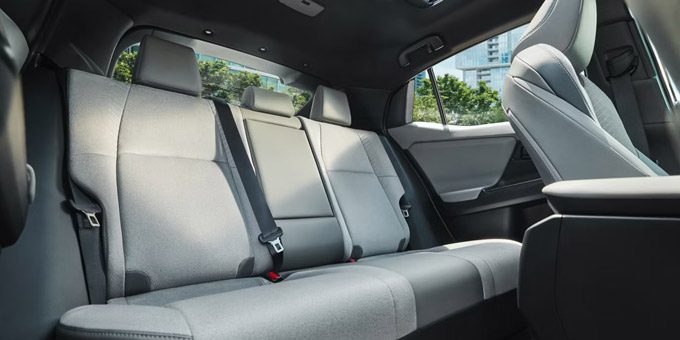
Space: As a small crossover, rear seat space is still not its strong suit. Multiple media reviews indicate that rear legroom is somewhat cramped, making it more suitable for children or smaller passengers. However, cargo space can be expanded to nearly 60 cubic feet (approximately 1700 liters) with the rear seats folded down.
2025 Fuel/Hybrid C-HR: Before its discontinuation in the U.S. market, its starting price was below $25,000.
2026 Toyota C-HR EV (U.S. Market): Its positioning has shifted significantly upwards. The SE entry-level model starts at $37,000, and the high-spec XSE model starts at $39,000 (both plus a delivery fee of around $1,395). This is even higher than the starting price ($34,900) of the front-wheel-drive version of the Toyota bZ (the facelifted bZ4X), which is also based on the e-TNGA platform. The main reason for the price increase is the standard inclusion of the high-performance dual-motor all-wheel-drive system.
The table below clearly shows the specific versions and pricing for the 2026 U.S.-spec C-HR EV:
| Model Version | U.S. Market Starting Price (MSRP) | Drivetrain | Max Horsepower | EPA Estimated Range |
| 2026 C-HR SE | $37,000 | Dual Motor AWD | 338 hp | 287-290 miles |
| 2026 C-HR XSE | $39,000 | Dual Motor AWD | 338 hp | 273 miles |
The 2026 Toyota C-HR EV represents a complete overhaul from the inside out.
Although the price has increased significantly and rear seat space remains a drawback, the 2026 C-HR EV successfully carves out a “stylish choice” niche for itself in the fiercely competitive electric SUV market, thanks to its impressive performance, distinctive design, and practical range. It is no longer an ordinary commuting tool but an electric crossover that brings driving pleasure. For global consumers seeking individuality and performance, it is undoubtedly worth looking forward to.

