
Are adaptive cruise control and lane assist worth the extra cost?
Imagine this: you drive on the long, straight Interstate 5 in California, USA. The road stretches endlessly before you. An endless stream of traffic surrounds you. After one hour, your right foot starts to ache. After two hours, your concentration begins to wander slightly. At this moment, what if your car could automatically follow the vehicle ahead and steer itself? Adaptive Cruise Control (ACC) and Lane Keep Assist (LKA) promise you this relaxed driving experience. However, you see the optional extras price list from car manufacturers. You might then hesitate: Are these features really worth that extra significant money?
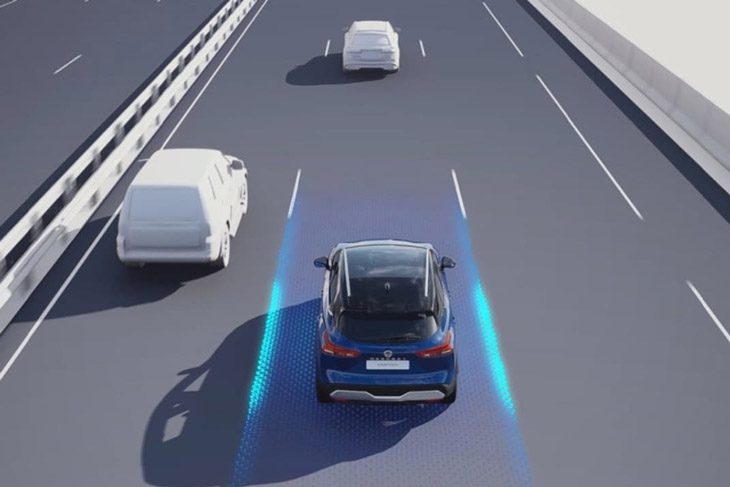
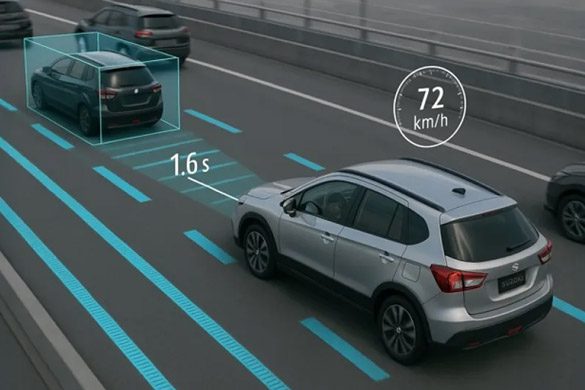
First, we need to clarify what these two technologies actually are. You can see Adaptive Cruise Control as an upgraded version of traditional cruise control. It uses radar and cameras to monitor the distance to the car in front. You set a maximum speed. For instance, you might choose the common 75 miles per hour on U.S. interstates. The vehicle will then automatically accelerate or decelerate. It does this to maintain the safe distance you set.
Lane Keep Assist, on the other hand, handles lateral control. It identifies the lane markings on the road. If your vehicle unintentionally drifts out of its lane, it actively applies gentle steering force. This pulls you back toward the center of the lane. On Germany’s unlimited-speed autobahns, you might drive at very high speeds for extended periods. During such times, this subtle correction can significantly reduce mental strain. When you combine these two, they form the core of what we often call Level 2 (L2) driver assistance.
The answer to the “extra cost” question varies by your region and the brand. Globally, pricing strategies among different automakers differ dramatically.
Take Tesla in the U.S. market as an example. It represents the classic model where you unlock driver assistance features via paid options. For years, Tesla has offered its “Enhanced Autopilot (EAP)” in the U.S. This package includes more advanced functions like Navigate on Autopilot and Auto Lane Change. Tesla reintroduced this package in 2022. It cost a hefty $6,000 in the United States. And if you want its promised “Full Self-Driving Capability (FSD),” the price in the U.S. is even higher. It reaches $12,000.
Of course, not all brands are this expensive. Many mainstream automakers, such as Toyota or Volkswagen, offer driver assistance packages containing ACC and LKA. They provide these as optional extras for certain models sold in the European market. These packages can cost several thousand Euros. For example, a German consumer buying a new Golf might need to pay an additional 1,000 to 1,500 Euros to get this system. In the Japanese market, however, the situation differs. When consumers purchase the top-of-the-line Crown model, L2-level driver assistance comes as standard. This includes these functions and requires no extra payment. The vehicle’s starting price is around 4.3 million Japanese Yen.
It’s worth noting that the competitive landscape of the global automotive market is changing. Nowadays, if you pay attention to information related to Chinese car exports, you’ll discover a very interesting trend. Many Chinese-brand cars export to Europe, Australia, or Southeast Asia. Examples include BYD or Nio. They often include advanced ACC and LKA as standard features. Sometimes they even include more sophisticated navigation-guided driving assistance. This strategy aims to attract overseas consumers. These consumers would otherwise pay a high price for optional extras from local brands. This gives the phrase “extra cost” a whole new definition in the global context.
Now that the price is clear (or it’s clear that it costs extra), we face the next question: What does it bring you?
A Leapmotor C11 owner from China shared his real experience. He said: “This feature suits highways very well. During the National Day holiday, I drove back to my hometown. It basically liberated my feet.” He mentioned that the vehicle not only automatically adjusts speed and distance. It also automatically turns the steering wheel to follow the road curvature. For those who frequently undertake long-distance driving, this sense of relaxation is priceless. Think of drivers commuting weekly through Australia’s outback highways. Think of drivers traveling on Canada’s long, wintry freeways. For them, this benefit is immense.
However, we must remain clear-headed. The U.S. Insurance Institute for Highway Safety (IIHS) conducted in-depth research. They found that these systems aren’t omnipotent in daily driving. Engineers tested models like the BMW 5 Series, Mercedes-Benz E-Class, and Tesla Model 3. They identified a potential risk: when vehicles crest over hills (hill crests), the lane-keeping system might “lose its bearings.” This happens because it temporarily can’t see the lane lines. For instance, during testing, the Volvo S90 deactivated its steering assistance by itself. This occurred on several occasions after cresting a hill. Similarly, ACC might also react less keenly than a human driver. This can happen when facing a stationary line of vehicles.
This question sits at the core of the debate. IIHS research data indicates that while functions like Automatic Emergency Braking (AEB) can significantly reduce collision claim rates, ACC and lane-keeping technology haven’t shown similarly significant safety improvements. David Harkey, the president of the institute, even stated this directly. He said these features seem more like “comfort amenities” than “safety technologies.” This means you spend your money purchasing comfort and convenience. You are not buying a bodyguard that actively avoids collisions.
So, let’s return to the initial question: Is it worth the extra cost? It depends on your region, your wallet, and your driving habits.
Consider Paying If:
Consider Skipping If:
From a global perspective, the value of ACC and Lane Keep Assist is increasingly becoming higher. Technological iterations continue. Their performance in curves becomes smoother. Their recognition of stationary vehicles becomes more precise. Particularly with the large volume of Chinese cars being sold overseas, a shift is happening. They are turning features that previously cost thousands of dollars as options into standard equipment. This undoubtedly puts pressure on established European and American automakers. It is also quietly changing how consumers define “value.”
Ultimately, before you decide to pay, we strongly recommend you take a test drive. Go on suburban roads in the United States. Drive on Seoul’s ring roads in South Korea. Activate these features yourself. Feel whether they make you at ease or tense. After all, this money buys not just a feature. It buys your driving experience for years to come. If you find that it can lessen the fatigue on your face even by a little, then you have spent that money well.

