
When should drivers use adaptive cruise control?
In 2026, with the official launch of Level 3 (L3) autonomous driving pilot programs in cities like Beijing and Chongqing, China, driver-assistance technology has moved beyond a distant concept. The progression from basic Level 2 (L2) assistance to conditional vehicle takeover by L3 systems represents fundamentally different driving experiences and divisions of responsibility.
Understanding these differences is crucial for consumers considering purchasing vehicles with intelligent driving features, especially those focusing on the new energy models within the chinese cars for sale market.
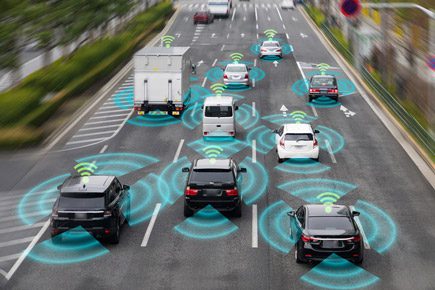
The classification of driver assistance levels is based on the SAE J3016 standard established by SAE International. This standard defines six levels from L0 to L5, with the core distinction lying in “who is driving” and “who is monitoring.”
Level 2 and below are termed “driver support systems,” where the human driver must constantly supervise the environment and be ready to take over immediately. At Level 3, under specific conditions, the system can perform the driving task, and the driver must be prepared to intervene only when the system requests.
The differences between L2, L2+, and L3 are far more than incremental; they represent distinct boundaries in capability and legal liability in practical use.
The table below clearly illustrates the core practical differences between these three levels:
| Feature Dimension | L2 Driver Assistance | L2+ Advanced Driver Assistance | L3 Conditionally Automated Driving |
| Liability Entity | Driver bears full responsibility. | Driver bears full responsibility. | Manufacturer bears primary liability while the system is active. |
| Operational Mode | Driver must constantly monitor and be ready to take over. | Driver must constantly monitor and be ready to take over. | System drives under specific conditions; driver must take over upon request. |
| Typical Functions | Adaptive Cruise Control (ACC), Lane Centering. | Highway Navigate on Autopilot (NOA), City NOA, Memory Parking. | System-dominated driving on specific road sections (e.g., highways). |
| Applicable Scenarios | Structured roads (highways, expressways). | Extended to some urban roads. | Policy-approved pilot road sections. |
| Representative Tech | Traditional ADAS solutions. | Platforms like Qualcomm Snapdragon Ride, Huawei ADS. | Certified L3 systems with market准入许可. |
As the table shows, the essential leap from L2 to L3 is the transfer of liability. When an L3 system is active, the liability entity shifts for the first time from the driver to the manufacturer in case of a system-caused incident.
Global automakers are pursuing different paths to implement these features. One is the open-platform approach represented by Qualcomm and BMW, while the other is the vertically integrated route exemplified by Tesla.
The Snapdragon Ride platform, co-developed by Qualcomm and BMW, exemplifies the former. It supports scalable functionality from L2 to higher levels. This system has already been validated in over 60 countries and regions and plans to expand to over 100 by 2026.
Meanwhile, mapping companies like HERE Technologies integrate their AI-powered map data with such platforms, extending the vehicle’s perception range by creating an “electronic horizon.”
In early 2026, China took a critical step in the commercialization of autonomous driving. The BAIC Arcfox Alpha S L3 version received approval to begin road pilots on designated sections like the Beijing-Taipei Expressway and Beijing Daxing Airport Expressway.
These L3 pilot vehicles follow a strategy of “corporate users first, gradually opening to private users.” The pilots not only validate the technology but also explore solutions to commercialization challenges like liability division and insurance claims in real-road environments.
With technological advancements and economies of scale, the cost of intelligent driving features is falling rapidly. In 2026, the hardware cost for high-end systems has decreased by over 40% compared to 2024. For example, the unit price of LiDAR has dropped from the 10,000-yuan range to between 3,000 and 5,000 RMB.
If your driving is primarily urban commuting, an L2+ system can already cover over 90% of daily scenarios, providing effective traffic jam assistance. Currently, in the Chinese market, the optional price for high-end systems on some models ranges from 10,000 to 35,000 RMB (approximately $1,400 to $5,000 USD).
For the many new energy models among chinese cars for sale, intelligent driving systems have become a significant selling point. Consumers can make more suitable choices based on their primary usage scenario—frequent long-distance travel or mainly city commuting—rather than blindly pursuing the highest technical level.
The global automotive industry views 2026 as the inaugural year for L3 autonomous driving commercialization. Industry forecasts predict the market penetration rate for L3 could grow from the current 0.2% to 3.4% by 2030.
Concurrently, L2 driver assistance is rapidly becoming commonplace, with its penetration rate for new cars in the Chinese market expected to exceed 70% in 2026, further extending to economy electric vehicles priced around 100,000 RMB.
This trend is also reflected in the global performance of chinese cars for sale. In January 2026, overseas sales for major Chinese automakers continued to grow; for instance, BYD’s overseas sales increased by 43.3% year-over-year, accounting for nearly half of its total sales volume.
As L3 autonomous test vehicles merge smoothly into highway traffic on Beijing’s pilot routes, test cars in Chongqing have already accumulated over 70,000 kilometers of intervention-free driving on complex interchanges.
Global tech companies like Qualcomm are promoting their driver-assistance platforms to over 100 countries and regions, while Chinese automakers are gaining increasing international attention due to their rapid iteration in intelligent features.
The role behind the steering wheel is being redefined, gradually shifting from a pure operator to a supervisor of the journey.

