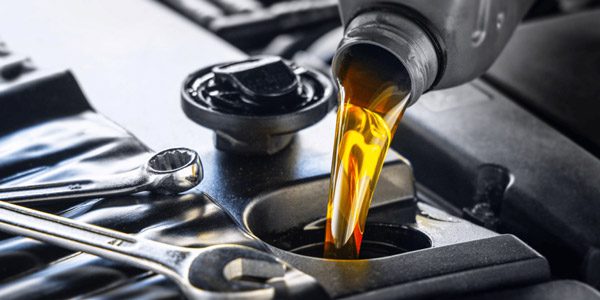
Engine oil is often referred to as the “lifeblood” of an engine, and its importance is self-evident. However, many car owners often focus only on whether there is enough oil during maintenance, overlooking the fact that “excess” can also cause serious problems. This article will systematically analyze the role of engine oil, the hazards of overfilling, identification methods, and solutions to help you better protect the heart of your vehicle.
1. How Does Engine Oil Work in an Engine?
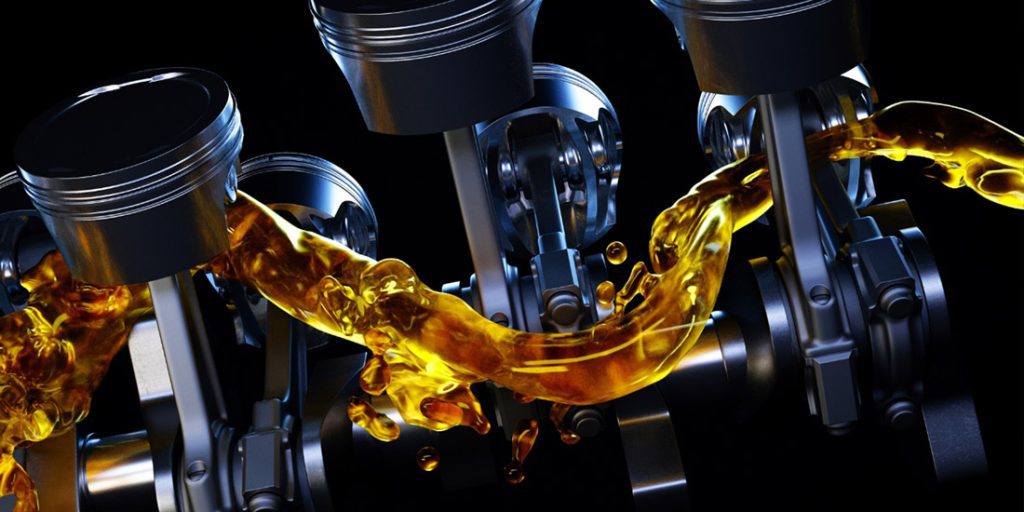
Engine oil plays multiple key roles inside an engine:
- Lubrication & Friction Reduction: Forms an oil film between metal components to reduce direct contact and wear.
- Cooling: Absorbs and carries away heat generated in the combustion chamber and from friction pairs.
- Cleaning & Dispersion: Suspends and carries away combustion by-products, metal particles, and other contaminants.
- Sealing & Leak Prevention: Fills the gaps between piston rings and cylinder walls to maintain cylinder pressure.
- Rust & Corrosion Prevention: Forms a protective film on metal surfaces to prevent oxidation and corrosion.
- Cushioning & Shock Absorption: Acts as a damping medium to reduce impact loads.
These functions together ensure the engine can operate stably under the harsh conditions of high temperature, high pressure, and high speed.
2. Hazards of Overfilling Engine Oil
The “more is better” mentality is completely inapplicable when it comes to adding engine oil. The dangers of excess oil are often underestimated, but the consequences can be more severe than having insufficient oil:
- Abnormally High Crankcase Pressure
- The high-speed rotating crankshaft will violently agitate the excess oil, creating a large amount of foam.
- This leads to unstable oil pressure and reduced efficiency of the lubrication system.
- Oil Foaming and Air Binding
- Foamy oil contains air, significantly reducing its lubricating and heat transfer capabilities.
- This can cause abnormal operation in precision components like hydraulic lifters, resulting in knocking sounds.
- Increased Engine Resistance and Power Loss
- The crankshaft requires extra work to churn the oil, directly consuming engine power.
- Actual measurements show severe overfilling can lead to a 3-5% power drop and a 2-4% increase in fuel consumption.
- Damage to the Catalytic Converter and Oxygen Sensors
- Excess oil is more easily drawn into the combustion chamber by the piston rings and burned (worsening “oil burning”).
- The ash produced from combustion can clog the catalytic converter substrate and contaminate oxygen sensors.
- Replacing these components is expensive and negatively impacts emissions and environmental protection.
- Seal Damage and Oil Leaks
- Excessively high crankcase pressure forces oil to seep out from weak points like seals and valve cover gaskets.
- Long-term high-pressure environments accelerate seal aging, causing persistent oil leaks.
- Accelerated Long-Term Wear
- Foamy oil cannot form a stable oil film, causing critical components (like camshafts, crankshaft bearings) to operate in a boundary lubrication state.
- This can lead to premature wear, and in severe cases, even cause catastrophic failures like engine seizure or cylinder scoring.
3. Symptoms of Excess Oil
If you notice the following signs, there may be an overfilling issue:
- Dipstick shows level above the maximum (MAX) mark: This is the most direct evidence.
- Blue smoke from the exhaust pipe: Especially during hard acceleration after idling, indicating excess oil is being burned.
- Increased engine noise: Particularly “clicking” or “tapping” knocking sounds.
- Sluggish power response and abnormally increased fuel consumption.
- Oil stains or a burnt oil smell in the engine bay.
- Oil pressure warning light flashes (on some models).
4. How to Correctly Check the Oil Level
The correct checking method is the prerequisite for accurate judgment:
- Preparations
- Park the vehicle on level ground.
- Turn off the engine and wait 5-10 minutes for the oil to fully drain back into the oil pan.
- For some models, refer to the specific recommendations in the owner’s manual.
- Checking Steps
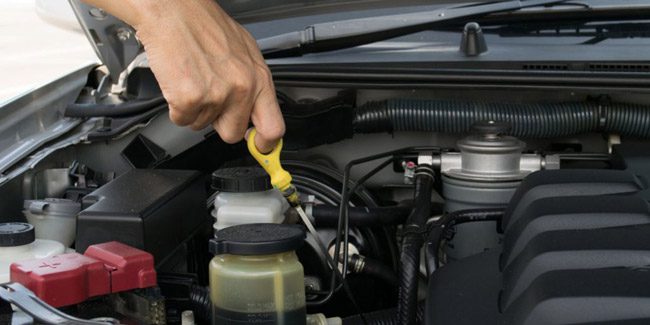
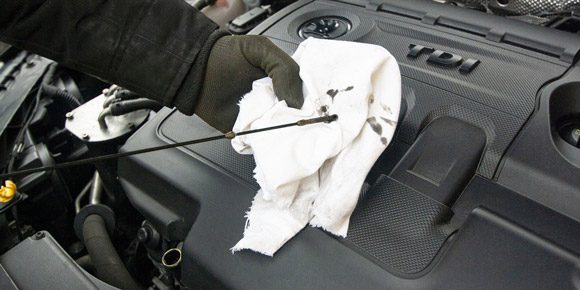
- Pull out the dipstick and wipe it completely clean with a lint-free cloth.
- Fully reinsert it, then pull it out again and observe the oil level.
- The correct oil level should be between the minimum (MIN) and maximum (MAX) marks, ideally around the 3/4 point.
- Precautions
- Avoid checking immediately after the engine is hot (the reading will be low).
- Some newer models use electronic dipsticks; please familiarize yourself with how to read them.
- When checking, pay attention to the oil’s color and consistency. If it’s excessively black/dirty or contains metal particles, further inspection is needed.
5. How to Safely Remove Excess Oil
If excess oil is confirmed, do not ignore it. Here are safe handling methods:
Method 1: Using a Dedicated Fluid Extractor/Pump (Recommended)
- Insert a thin tube through the dipstick tube or oil fill hole.
- Manually or electrically pump out the excess oil.
- Advantages: No need to crawl under the car, clean operation, allows precise control of the amount removed.
Method 2: Draining from the Oil Pan Drain Plug
- Prepare a drain pan and tools.
- Loosen the drain plug slightly, slowly drain a small amount of oil, and immediately retighten.
- Disadvantages: Inconvenient operation, can get messy, and it’s easy to drain too much.
Method 3: Professional Service
- If unsure about doing it yourself, it’s recommended to go to a repair shop.
- Technicians can handle it quickly and check for any other complications.
- The cost is usually not high and ensures standardized and safe operation.
After treatment, be sure to:
- Check the dipstick again to ensure the oil level is correct.
- Start the engine and let it run for a few minutes, observing for any abnormal noises or warning lights.
- Check if the exhaust from the tailpipe returns to normal.
- If any abnormalities persist, contact a professional technician promptly.
Summary and Preventive Advice
Adding engine oil may seem simple, but it directly affects engine lifespan and performance. Regularly and correctly checking the oil level should become an essential car maintenance habit for every owner. During service, proactively communicate with the technician, clearly stating the standard fill quantity required for your vehicle model (usually 4-6 liters, see the manual for specifics). Remember: the safe range for the oil level is within the marks on the dipstick.
Prevention is always better than repair. Developing the habit of checking the oil once a month not only helps avoid overfilling issues but also allows for early detection of abnormal oil consumption, potential leaks, and other problems. This keeps the heart of your vehicle in optimal condition, ensuring driving safety and economic efficiency.