
Is It Better to Buy a Car at Month-End or Year-End?
Spacious SUV interiors can easily accommodate luggage for the whole family and weekend shopping, while low center of gravity sedans excel on winding roads, offering a more engaging drive. Both body types have their own advantages in city driving, leaving many car buyers torn between them.
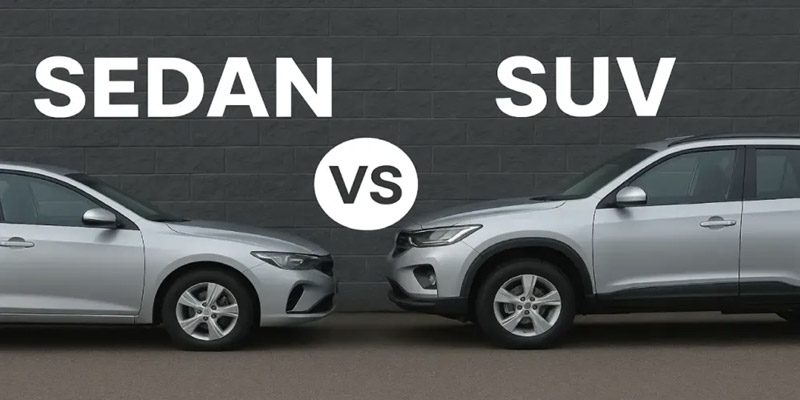
In urban driving, SUVs and sedans exhibit distinctly different characteristics. In fact, their design philosophies target different usage scenarios from the start.
SUVs have higher ground clearance, allowing them to handle common speed bumps and occasional potholes with ease. Sedans, on the other hand, have a lower center of gravity, which provides greater stability when cornering and changing lanes.
In terms of space, SUVs offer more generous headroom and legroom, and the rear seats can be folded down to carry larger items. Sedans come close to SUVs in terms of shoulder room, but vertical space is more limited.
Visibility also differs noticeably. The SUV’s “command-style” high seating position gives drivers a better view of the road ahead. The sedan’s lower seating position, while offering a more limited forward view, results in lower aerodynamic drag and better fuel efficiency.
For daily commuting, fuel economy is often the top priority. Sedans in the same class typically consume less fuel than SUVs, a difference that becomes even more pronounced in stop-and-go city traffic.
For example, the 2025 Toyota Corolla achieves a city fuel economy of 32 miles per gallon in the U.S. market. SUVs in a similar price range often struggle to match this, as their heavier weight and larger frontal area increase energy consumption.
Maneuverability is another important urban driving consideration. The sedan’s lower center of gravity makes it more stable when turning or making sudden lane changes—especially valuable for drivers who frequently navigate congested city traffic.
Parking convenience also matters. The sedan’s more compact dimensions make it easier to find parking spaces, while the SUV’s larger footprint can pose challenges on narrow streets or in tight parking spots.
City drivers with families often prioritize space and practicality. The spacious interior of an SUV can easily fit child seats, strollers, and luggage for family trips.
For households that regularly transport large items, the SUV’s foldable rear seats offer flexible cargo space. The sedan’s enclosed trunk design, however, can be less convenient for loading bulky or irregularly shaped objects.
Safety perception also plays a role. Many people assume that larger, heavier SUVs provide better protection in a collision. Yet modern sedans also come equipped with advanced safety technology, meaning safety cannot be judged by vehicle type alone.
It is worth noting that many Chinese automakers have launched highly cost-effective family-oriented models in the new-energy SUV segment. These models perform strongly in the market for Chinese cars for sale, with some even experiencing supply shortages.
In terms of comfort, sedan seats are generally designed with better ergonomics, conforming more closely to the driver’s body—a meaningful benefit for those with long daily commutes.
SUVs offer a more upright seating position, which some drivers find less tiring over long distances. The higher seat height also makes getting in and out easier, which can be especially helpful for families with elderly or mobility-impaired passengers.
Noise control is another factor. Thanks to their sleeker shape and lower profile, sedans tend to have better wind noise insulation at higher speeds. SUVs, with their taller bodies and larger frontal area, often produce more noticeable wind noise.
When it comes to purchase price, SUVs in the same class are usually more expensive than sedans. For instance, the 2025 Mazda3 starts at $24,150 in the U.S., while a comparable SUV from the same brand often costs several thousand dollars more.
Long-term costs include fuel, insurance, and maintenance. Because SUVs generally consume more fuel, lifetime fuel expenses tend to be higher. Wear-and-tear parts like tires and brake pads may also cost more to replace on an SUV.
Notably, China’s new-energy vehicle market has grown rapidly in recent years, and many Chinese-brand EVs have shown impressive resale value. For example, Xiaomi’s new-energy cars achieved a first-year resale rate as high as 102%, exceeding their original purchase price.
This strong residual value makes such models highly attractive in the market for Chinese cars for sale, even drawing attention from international buyers.
City driving doesn’t always mean smooth roads. Speed bumps and potholes are common, and the SUV’s higher ground clearance allows it to handle these obstacles more easily.
In a light off-road test conducted by BitAuto, the Subaru Forester—thanks to its higher ground clearance—cleared a steep curb without scraping its undercarriage, while the Volkswagen Tiguan and Audi Q5, with lower clearance, experienced minor undercarriage contact.
Performance in bad weather is another consideration. SUVs often offer optional all-wheel-drive systems, which provide better traction in rain or snow. Most sedans are front- or rear-wheel drive only and may not match the stability of an AWD SUV on slippery surfaces.
Of course, if city roads are well maintained, a sedan can easily meet daily needs. Moreover, the sedan’s lower chassis offers greater stability and less body roll at highway speeds.
The table below summarizes the key differences between SUVs and sedans in urban driving:
| Dimension | SUV Advantages | Sedan Advantages |
| Space Flexibility | More headroom; rear seats fold flat to create a level cargo floor | Shoulder room close to SUVs; enclosed trunk offers better security |
| Fuel Economy | Generally higher fuel consumption in the same class | Lower fuel consumption, better for long commutes |
| Handling Stability | More noticeable body roll in high-speed corners | Low center of gravity provides better stability in turns and lane changes |
| Parking Convenience | Larger size can be challenging in tight spaces | More compact dimensions make parking easier |
| Ground Clearance | Higher ground clearance, better over speed bumps and rough patches | Lower ground clearance limits rough-road capability |
| Resale Performance | Some new-energy SUVs have high resale value | Traditional sedans have steady resale value; some new-energy models excel |
The final choice depends on individual lifestyle needs: if you have a long commute and prioritize fuel economy and agile handling, a sedan is a smart pick. If you need more space, a higher view of the road, and greater ground clearance, an SUV is the better option.
Whichever type you choose, the diversified development of the Chinese cars for sale market offers consumers a wide range of options—from traditional gasoline models to new-energy vehicles, economy to luxury—meeting the varied needs of today’s urban drivers.

