
Are Chinese Cars Cheaper Than European Cars in Algeria?
China is currently the world’s largest vehicle exporter. In 2025, China’s vehicle exports have exceeded 5.2 million units. Whether you are a dealer in Dubai or a car enthusiast in Germany, seeing more and more chinese cars for sale might catch your interest. However, before placing an order, you must understand: The total cost of getting a car from a Chinese factory to your doorstep is far more than just the price on the tag.
As an international buyer, you need to consider the vehicle’s base cost, tariffs, shipping, and compliance fees. This article will break down these expenses for you in the most straightforward way.
It all begins here. This is the amount you pay to your Chinese supplier.
New Car Procurement
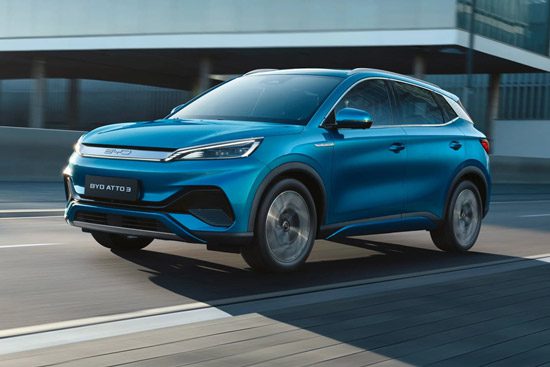
If you intend to import a new car, the purchase price depends on the brand and configuration. For example, a BYD ATTO 3 (Yuan PLUS) sold domestically in China starts at around $17,000. Please note, this is only the base vehicle price and does not include China’s Value Added Tax (VAT).
Used Car Procurement
If you are targeting the used car market, prices fluctuate significantly. The procurement cost for a 3-year-old gasoline SUV could be as low as $8,000 to $12,000. However, you must verify that the vehicle has no ownership disputes, as this can directly delay the export process.
At this stage, you need to transport the vehicle from dealers across China to an export port (such as Shanghai Port or Ningbo Port). Domestic short-distance transport fees within China are usually only $200 to $500.
The vehicle must complete its “status transition” within the Chinese legal framework to leave the country legally.
Purchase Tax and Compliance
For new vehicles, purchase tax (at a rate of 10%) is typically required. However, there is a significant advantage: New Energy Vehicles (NEVs) enjoy tax reductions and exemptions in China. Under the current policy, eligible NEVs are exempt from purchase tax until the end of 2026. This directly saves a substantial expense for importing NEVs.
Export Licenses and Documentation
Most overseas buyers do not hold a Chinese export license, so you will need to handle the export through a trading company agent. This “channel fee” is usually 1% to 3% of the vehicle’s price. Additionally, you need to apply for an export license (approx. $30) and a third-party inspection report (approx. $120 to $300) to certify that the vehicle meets safety standards.
This is the segment with the most significant cost fluctuations. Ocean freight rates from China to various parts of the world have seen substantial increases in 2025.
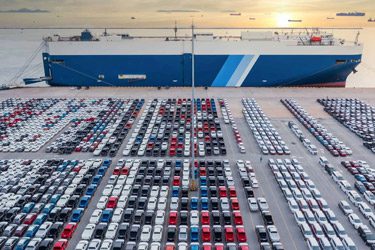
Freight Cost Variations
Insurance
International marine insurance typically costs 0.05% to 0.1% of the cargo’s value. For a $30,000 vehicle, the premium is only $15 to $30. Although inexpensive, purchasing it is highly recommended.
After the vehicle arrives in your country, the final major expense you face is import duty. This figure varies greatly from country to country.
U.S. Market
Current trade frictions have caused tariffs to soar. The U.S. imposes a duty of up to 100% on Chinese electric passenger vehicles (HS code 8703.80). This means that for a vehicle with a purchase price of $40,000, the tariff alone would be $40,000.
European Union Market
Europe is vigorously promoting green energy, but it has implemented anti-subsidy investigations concerning Chinese electric vehicles. Currently, the EU’s provisional tariff on Chinese electric vehicles is as high as 45%. If your vehicle meets the EU’s green standards (e.g., specific battery recycling code HS 8548), it might be eligible for certain tax rate reductions.
Southeast Asian Market
Taking Thailand as an example, the country offers incentive policies for electric vehicles imported from China, but these are contingent on meeting specific local sourcing requirements. For Completely Built-Up (CBU) units, tariffs typically range from 20% to 40%, depending on engine displacement and vehicle type.
Middle East Market
Gulf Cooperation Council (GCC) countries like Saudi Arabia implemented a new 12-digit HS code system in 2025. While base tariffs are relatively low (usually 5% to 10%), getting even one digit of the code wrong can mean missing out on preferential rates and potentially facing a fine of up to 25% of the vehicle’s value.
After calculating all the physical costs, there is an invisible “financial cost” to consider.
If you are a European buyer, you need to pay in Euros; if you are a Middle Eastern buyer, you pay in Dirhams. However, Chinese sellers typically require payment in Renminbi (RMB) or US Dollars.
This introduces currency exchange risk. In 2025, two-way fluctuations in the RMB exchange rate have become the norm. Suppose you only settle the final payment three months from now. If the RMB appreciates against your local currency, your cost in your home currency will increase. Savvy importers use forward contracts to lock in exchange rates, protecting their profits from being eroded by currency fluctuations.
Let’s connect all the steps above, assuming you are a German importer planning to bring in a Chinese-branded NEV SUV:
Final Total Cost = 30,000 + 900 + 4,000 + 30 + 15,314 + 500 = $50,744

