
What is tire rotation and why is it important?
The 2026 Chevy Blazer has officially arrived. This time, Chevrolet has made decisive adjustments. The Premier trim level has officially exited the stage, and the Redline Edition appearance package has been discontinued simultaneously. The RS version has jumped to become the new flagship. It now comes standard with a black roof and features the turbocharged four-cylinder engine as the base powertrain. If you prefer the V6 engine, it remains available, but exclusively on the RS and switched to an optional configuration.
First, let’s clarify a fact: The 2026 Chevy Blazer is not an all-new generation but a yearly refresh. However, the adjustments this time are significant, directly impacting consumer purchasing paths.
The Premier top-tier trim, still on sale in 2025, will completely disappear in 2026. Simultaneously, the Redline Edition appearance package has also been cut. Chevrolet’s thinking is clear: rather than having overlapping styles among Premier, RS, and Redline, it’s better to concentrate resources on strengthening the RS as a single sporty flagship.
Previously, the RS came standard with a V6, with the four-cylinder as the entry choice. In 2026, this is completely reversed: the 2.0-liter turbocharged four-cylinder engine (228 horsepower, 258 lb-ft of torque) becomes standard across the lineup, including the RS. The 3.6-liter V6 (308 horsepower, 270 lb-ft of torque) retreats to an optional position and is only open to RS buyers. This means: if you want a V6 Blazer, your only path is to choose the RS and pay extra.
Iridescent Pearl Tricoat has been canceled. Dealer-installed options like 20-inch bright silver wheels, the foldable cargo organizer, and the molded assist steps have also been removed from the catalog. On the new color front, the electric Blazer EV introduces Polar White Tricoat and Tech Bronze packages, but the fuel version has not followed suit for now.
The 2026 Blazer EV has also adjusted its product line. The sole rear-wheel drive version has been cut, meaning the former longest-range RWD RS (334 miles) is history. The current electric version retains only three drive forms: FWD, AWD, and high-performance AWD (SS). Chevrolet’s official explanation is straightforward: “To simplify the product line while retaining the most popular options among consumers.”
The 2026 Blazer maintains three core trim levels in the U.S. market: 2LT, 3LT, and RS. All prices are MSRP (Manufacturer’s Suggested Retail Price) and do not include destination charges ranging from $1,395 to $1,895.
The 228-horsepower four-cylinder engine becomes the absolute mainstay in 2026. Frankly, it’s not aggressive, but it’s sufficient. MotorTrend measured 0-60 mph at about 7.5 seconds, making city passing effortless. The 9-speed automatic transmission is tuned for smoothness, avoiding frequent shifting jolts.
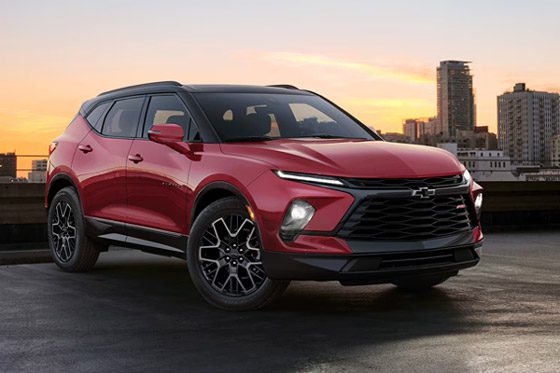
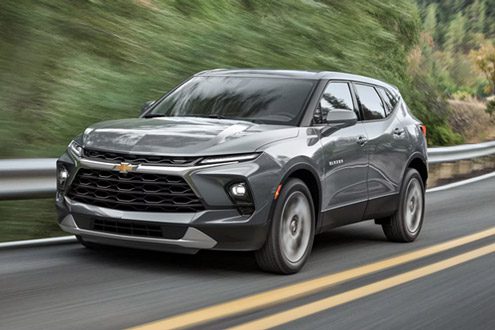
If you opt for the V6, 0-60 mph shortens to 6.1 seconds. The exhaust note and acceleration capability from 308 horsepower are the complete expression of the Blazer’s sporty positioning. The trade-off is fuel consumption: FWD drops to 22 mpg combined, and AWD only 21 mpg.
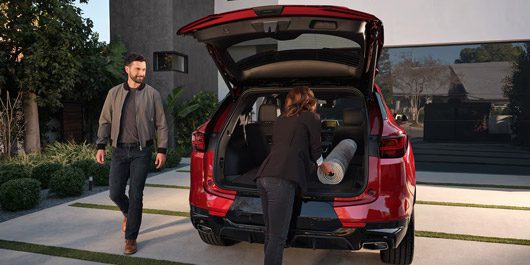
The Blazer’s rear legroom is at the upper end of its class, with adult males sitting comfortably without knees hitting the front seats. However, the trunk is a weak spot: only 30.5 cubic feet with seats up, far behind the Honda Passport and Hyundai Santa Fe. With seats folded, it expands to 64.2 cubic feet, and the floor is mostly flat, making it capable for moving IKEA’s larger furniture.
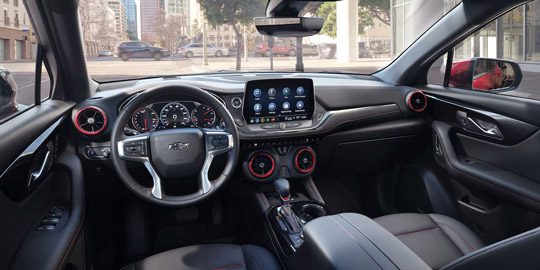
Turbine-style air vents and a center screen tilted toward the driver—these Camaro genes remain appealing. But the lower center console and lower door panels still use hard plastic. If you’re switching from a Cadillac XT5, you’ll notice a significant drop; if you’re coming from a Japanese class model, it might feel just right.
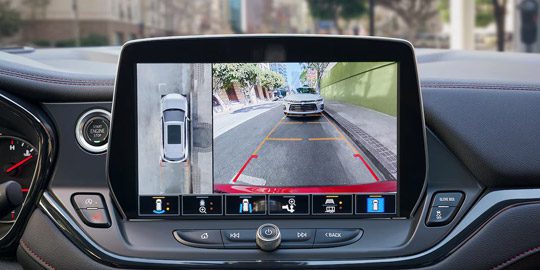
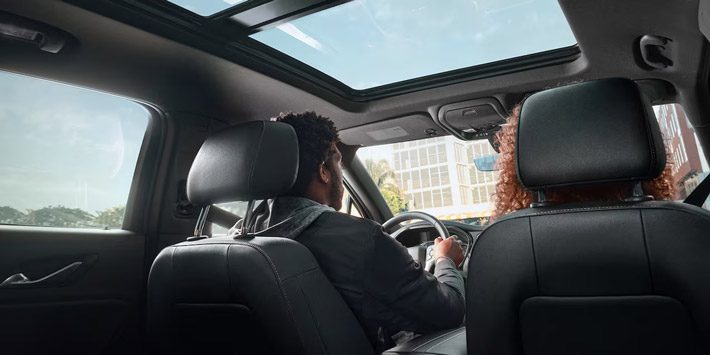
The 2026 Chevy Blazer isn’t an all-rounder, but it has distinct characteristics.
Recommended Buyers: Consumers in the U.S. and Canada who value exterior design, want to stand out from the sea of CR-Vs/RAV4s, aren’t extremely sensitive to cargo volume, and have a budget around $40,000.
Recommended Version: 3LT front-wheel drive. It offers a more premium feel than the 2LT, is about $4,000 cheaper than the RS, and has lower fuel consumption.
Is the V6 Still Necessary? If you plan to keep the vehicle long-term (5+ years), the V6’s smoothness and reliability still hold value. If you’re only driving it for 3 years, the four-cylinder version actually has better resale value.
For global buyers, especially consumers in non-EU markets across Eurasia: Keep an eye on channels for chinese cars for sale. The 2026 Chevy Blazer still commands markup prices in the U.S., but Chinese exporters can already offer more competitive cross-border delivery solutions through overseas direct procurement and domestic bonded transit.
Final Reminder: The fuel-powered Blazer and the Blazer EV are two completely different vehicles. The former uses the C1XX platform, shared with the Cadillac XT5; the latter is on the BEV3 pure electric platform, sharing a chassis with the Lyriq. Be sure to distinguish between them when shopping—aside from the name, they have little in common.

