


2026 Hyundai Palisade Hybrid Review: A Smarter Three-Row SUV for Families
The 2026 Toyota Tacoma is here. It returns with a full slate of upgrades and continues to dominate the midsize pickup segment. Last year, Toyota sold 274,638 Tacomas in the United States, a year-over-year increase of 42.4% and the model’s best annual sales record in more than three decades. Entering the first quarter of 2026, the momentum has not slowed at all — the Tacoma moved 69,263 units, up 15.8% year-over-year. That is nearly triple the volume of the second-place Chevrolet Colorado (21,596 units).
Such staggering sales are no accident. What exactly does the 2026 Tacoma bring to the table in terms of product strength? And what noteworthy changes do the TRD family deliver? We will break it all down for you, from design, powertrain, interior, and off-road capability to the global market landscape.
First, let’s get acquainted with the 2026 Tacoma’s full lineup. Toyota offers eight main trim levels for this midsize pickup: SR, SR5, TRD PreRunner, TRD Sport, TRD Off-Road, Limited, TRD Pro, and Trailhunter. Additionally, two cab styles (XtraCab and Double Cab) and two bed lengths (5 feet and 6 feet) are available.
The entry-level SR is powered by a 2.4-liter turbocharged four-cylinder engine producing 228 horsepower and 243 lb-ft of torque. The six mid-tier trims from SR5 to TRD Off-Road receive the high-output version of this engine, delivering 278 horsepower and 317 lb-ft of torque.
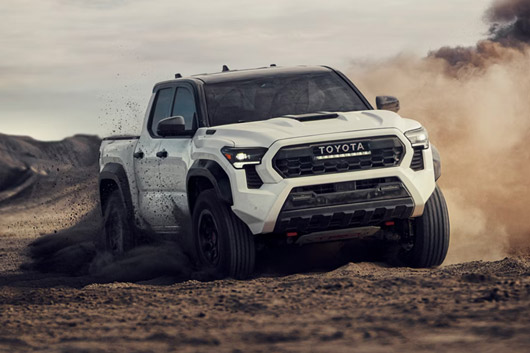
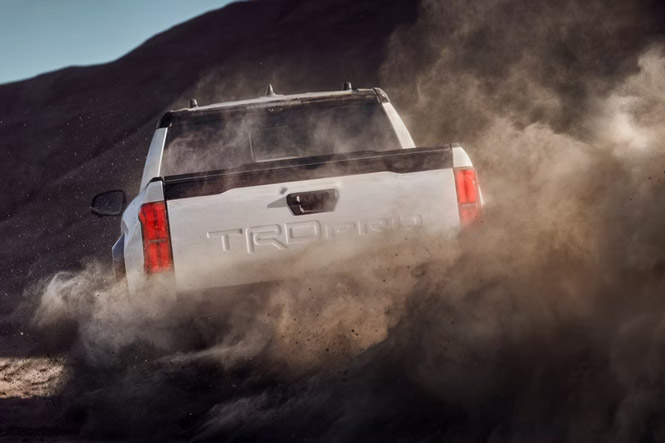
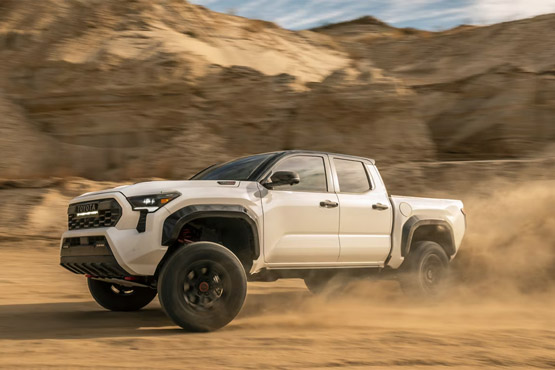
What really gets the heart racing, however, is the i-FORCE MAX hybrid powertrain. It pairs the 2.4T engine with an electric motor to unleash 326 horsepower and 465 lb-ft of torque. This system comes standard on the Trailhunter and is optional on the TRD Sport, TRD Off-Road, and Limited.
On the pricing front, the 2026 Tacoma starts at $32,145 (excluding destination fee), an increase of $555 compared to 2025. The TRD Sport starts at $41,610, while the TRD Off-Road begins at $44,010. It’s worth noting that higher-end models do not come cheap — both the TRD Pro and Trailhunter start at $65,945.
The 2026 Tacoma runs a 2.4-liter turbocharged four-cylinder engine across the entire lineup. This is not a compromise but a step forward. Even the base-tuned version is enough to bid farewell to the previous generation V6’s lackluster low-end torque.
The standard i-FORCE engine delivers 278 horsepower and returns 26 MPG on the highway. The i-FORCE MAX hybrid boosts output to 326 horsepower with a combined fuel economy of 23 MPG. The hybrid variant accelerates from 0 to 60 mph in just 7.1 seconds — a respectable figure for a midsize pickup.
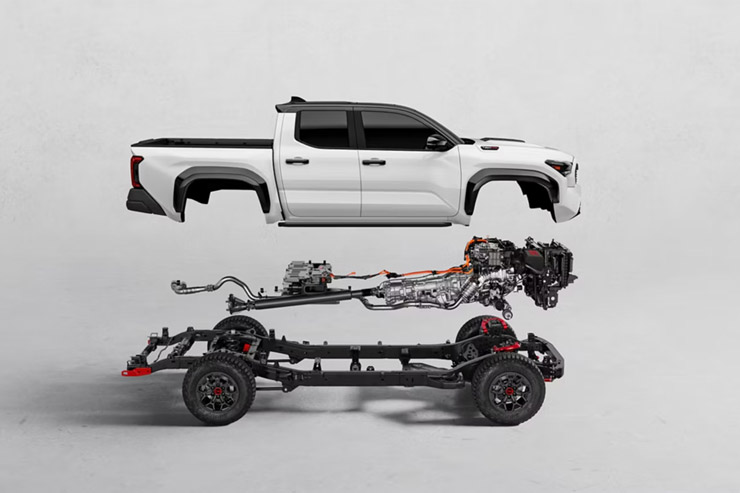
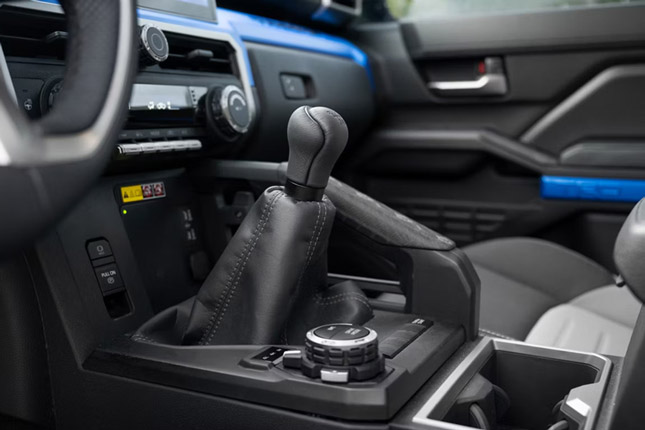
Transmission options are equally diverse. The mainstream pairing is an eight-speed automatic transmission. However, driving enthusiasts will notice a pleasant surprise: Toyota still offers a six-speed intelligent manual transmission. This manual gearbox features automatic rev-matching and anti-stall assist and is available on select i-FORCE models. After Jeep discontinued the manual Gladiator, the Tacoma became the only pickup in the U.S. market to offer a manual transmission. Against the backdrop of an increasingly homogenized global auto industry and fierce competition in many markets — including the highly contested arena where chinese cars for sale are vying for attention — Toyota’s decision to persist with the manual option feels exceptionally precious.
In terms of drive configuration, rear-wheel drive is standard, while part-time four-wheel drive and full-time four-wheel drive are both optional. Most i-FORCE MAX models come standard with four-wheel drive.
If you are passionate about off-roading, the suspension and chassis configuration of the TRD family is crucial. The 2026 Tacoma is built on the TNGA-F global truck platform, shared with the Tundra, Land Cruiser, and Sequoia. This provides a solid foundation for off-road capability.
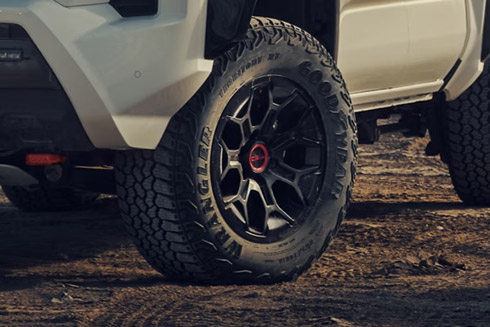
The TRD Off-Road is equipped with Bilstein monotube shocks that feature remote reservoirs, helping to extend wheel travel and improve suspension heat dissipation. The TRD Off-Road Premium package adds 18-inch TRD wheels and 32-inch Goodyear all-terrain tires.
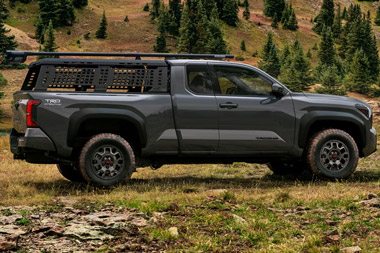
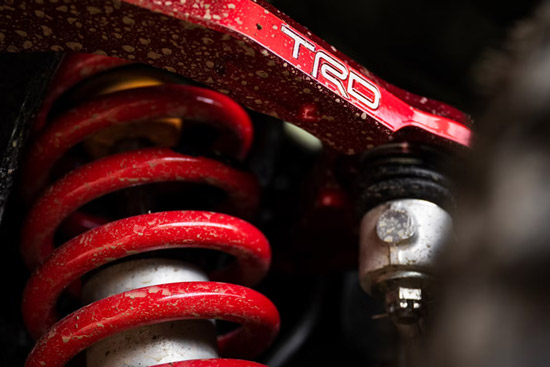
The TRD Pro, on the other hand, brings Baja-race-ready hardware. It features TRD-tuned FOX QS3 three-way adjustable shocks with remote rear reservoirs and a 1-inch front lift.
The Trailhunter is purpose-built for overlanding. It employs Old Man Emu 2.5-inch forged monotube shocks, tuned specifically for carrying heavy loads and tackling rugged surfaces. The Trailhunter also comes with an ARB steel rear bumper, RIGID Industries LED fog lights, and a grille with an integrated LED light bar.
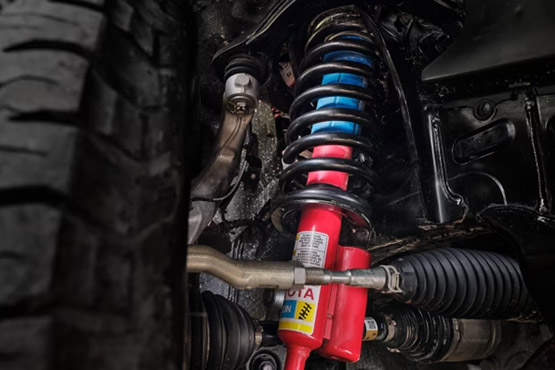
A standout feature shared by both top-tier models is SDM — the stabilizer bar disconnect mechanism. With the push of a button, the front anti-roll bar disconnects, maximizing suspension travel; once back on the pavement, another press reconnects the system. MTS Multi-Terrain Select, CC Crawl Control, and DAC Downhill Assist Control are also standard. As a test editor with years of off-road experience, I can tell you responsibly: these features perform seamlessly and fluidly when faced with mud, sand, rocks, and mild boulder-strewn trails.
The off-road torque advantage of the hybrid Tacoma is equally impossible to ignore. The electric motor delivers its full torque from low rpm, which is especially crucial in rock-crawling and vehicle-recovery scenarios. In addition, IQS, a chassis technology derived from the Toyota Land Cruiser, keeps every TRD grade from losing control or bottoming out during high-speed impacts and sustained vibration.
Step inside and you’ll find the 2026 Tacoma’s interior has undergone a sea change. Toyota has not followed the industry’s absurd trend of turning phone icons into car screen icons. Instead, it retains oversized knobs and physical buttons for controlling the climate system, drive modes, heated seats, and other functions.
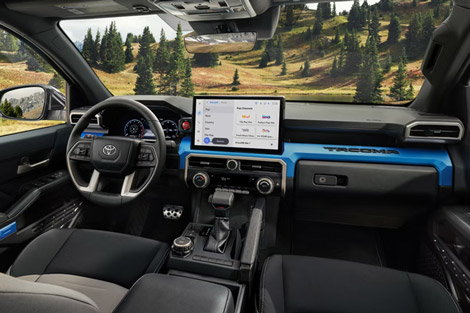
The center touchscreen is available in two sizes: 8 inches and 14 inches. The 14-inch touchscreen version comes with a JBL Premium audio system and includes a detachable JBL FLEX portable Bluetooth speaker. Wireless Apple CarPlay and Android Auto are both standard.
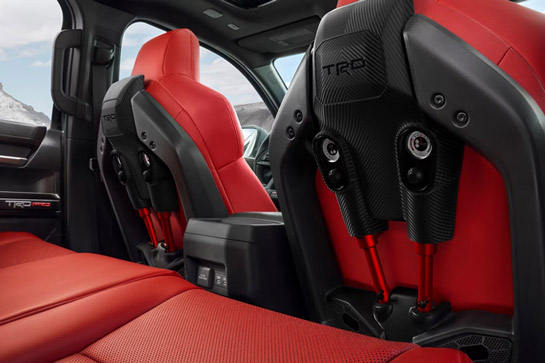
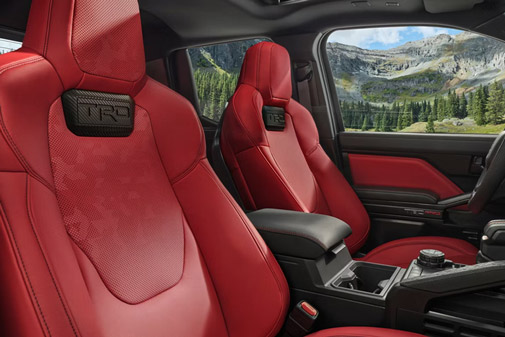
The IsoDynamic Performance front seats exclusive to the TRD Pro deserve a separate mention — they utilize an “air/oil” damping system to stabilize the driver’s head and neck during high-speed off-road driving. This is no longer simple ride comfort; it is genuine vibration-damping and noise-reducing technology.
At other trim levels, the Limited model excels in luxurious comfort — heated and ventilated seats, walnut wood trim, power side steps, a head-up display, a digital rearview mirror, and a panoramic sunroof are all standard or optional equipment. Interestingly, with the consumption upgrade in the global market, many brands whose chinese cars for sale now compete fiercely with the Tacoma in features like large center screens and digital rearview mirrors. Even so, the Tacoma’s balanced blend of durability and practicality still maintains its distinct edge.
The Tacoma dominates the U.S. market, but that does not mean it can rest easy. In the broader global competitive landscape, the midsize pickup segment is facing unprecedented change.
In its North American home market, the Tacoma’s direct rivals include the Ford Ranger, Chevrolet Colorado, GMC Canyon, Nissan Frontier, Honda Ridgeline, and Jeep Gladiator. Data shows that in the first quarter of 2026, the Ford Ranger sold 17,775 units, up 19.2% year-over-year, while the Jeep Gladiator fell to 10,087 units, a 16% decline. In this fierce market contest, midsize pickup consumers are voting with their wallets, and an increasingly globalized perspective on vehicle selection is reshaping perceptions of specifications once considered exclusive to the U.S.
A trend worth watching stems from global trade policy. In 2026, the U.S. maintains a complex tariff system on imported vehicles. According to the latest trade policies, Chinese-made vehicles entering the U.S. market face extremely high tax barriers — the comprehensive tariff rate for gasoline-powered cars is roughly 52.5%, and for pure electric vehicles the comprehensive rate soars to 127.5%. This makes it very difficult for Chinese automakers to export complete vehicles directly to the U.S. at present. In fact, China’s total vehicle exports to the U.S. were only 152,000 units in 2025, accounting for 1.83% of China’s total vehicle exports.
At the same time, more and more Chinese automakers are turning their attention to Mexico, establishing local factories to bypass tariff walls. Mexico enjoys a relatively low rate of 27.5% under the USMCA trade agreement, making it a springboard for global automakers laying out their North American market strategies — chinese cars for sale are penetrating the global market in a roundabout way. This means that over the next few years, the competitive logic of midsize pickups in the global automotive industry will become even more complex, and the competitive pressure the Tacoma faces will come not only from Detroit but quite possibly from overseas production capacity financed by Eastern investments.
To its credit, the Tacoma is entirely designed, engineered, and assembled in North America. This localization strategy not only aligns with Toyota’s decades-old manufacturing philosophy but also gives it a relatively stable competitive edge amid tariff and policy uncertainty.
Without question, the 2026 Toyota Tacoma delivers a convincingly strong performance in the midsize pickup arena. Its sales figures tell the whole story — the records set in the first quarter of 2026 and throughout 2025 are constantly pushing their own ceiling and floor limits, and the fact that the hybrid version accounted for nearly one-tenth of first-quarter sales only underscores the right direction of the powertrain revolution. Whether for daily commuting or weekend off-roading, the Tacoma switches between them seamlessly.
The TRD Sport suits those who favor on-road driving. The TRD Off-Road is an ideal choice for intermediate off-road enthusiasts. The TRD Pro and Trailhunter are aimed at hardcore adventurers who genuinely intend to conquer extreme terrain. Against the backdrop of a reshaping global automotive trade landscape, the trend of chinese cars for sale will gradually transform the competitive dynamics in segments outside North America, giving off-road enthusiasts an increasingly rich range of choices in the future.

