


2026 Hyundai Palisade Hybrid Review: A Smarter Three-Row SUV for Families
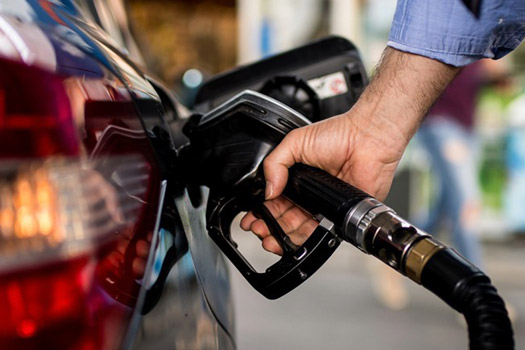
Have you ever felt that even though you are not driving fast, the fuel gauge drops much faster than expected? In fact, most of the time it is not a problem with the car itself, but some driving details we have grown so accustomed to that they “steal” fuel without us even noticing. More importantly, these habits usually do not get us to our destination any faster, yet they tangibly increase how often we have to visit the gas station. Let’s unmask these invisible fuel-consumption killers one by one.
Many people love to be the first to shoot out the moment the green light comes on, enjoying that push-back-into-the-seat sensation. However, the cost of such rapid acceleration is staggering. When the engine needs to deliver a huge burst of power in an instant, the fuel injectors spray far more fuel than is needed for smooth driving, leading to incomplete combustion and enormous energy waste. Studies show that aggressive driving habits can increase fuel consumption by more than 30%. On the contrary, pressing the accelerator smoothly and progressively, letting the transmission upshift unhurriedly, is the very foundation of saving fuel.
The inseparable companion of rapid acceleration is hard braking. Every time you brake, you are essentially converting the vehicle’s forward kinetic energy into heat on the brake discs, dissipating it for nothing. What is worse, after braking hard you are forced to step deeply on the accelerator again to regain speed, creating a vicious cycle of “accelerate–brake–accelerate again.” This driving style not only wastes fuel but also multiplies the wear on brake pads and tires. Anticipating road conditions in advance and using engine braking to coast and slow down can save you a considerable amount of fuel.
You may think that driving faster on the highway saves time, but from a fuel-consumption perspective, the opposite is true. Once the vehicle speed exceeds the economical speed range (usually around 80–100 km/h), air resistance becomes the main enemy of fuel economy. Drag is proportional to the square of the speed; in other words, the wind resistance at 120 km/h is far greater than at 90 km/h. To overcome this huge wind resistance, the engine has no choice but to drink more fuel. Maintaining a constant speed and staying close to the speed limit rather than far exceeding it is a rational balance of trading money for time.
In traffic, some drivers unconsciously adjust the accelerator frequently, making the speed rise and fall erratically. This “pulsating” state keeps the engine in transient operating conditions and prevents it from working steadily in its most efficient range. Using cruise control (on flat highways or in free-flowing traffic) can perfectly lock the throttle opening and eliminate these tiny, fuel-wasting fluctuations.
This is an extremely common yet grossly underestimated fuel-consumption factor. Low tire pressure significantly increases the tire’s rolling resistance. Think of it this way: riding a bicycle with half-flat tires is very strenuous, and a car works the same way. To overcome this extra resistance, the engine has to do more work. Even more seriously, insufficient tire pressure can also cause the tires to overheat, endangering driving safety. It is recommended to check tire pressure at least once a month and strictly follow the recommended values on the vehicle’s B-pillar nameplate when inflating.
A roof box or roof-rack crossbars may seem convenient, but they completely disrupt the vehicle’s original streamlined aerodynamic design, creating huge vortex drag at high speeds. Even with nothing on top, just the crossbars alone can increase fuel consumption. At the same time, items that sit permanently in the trunk — cases of water, sports equipment, books, and other clutter — force the engine to carry a “heavy burden” over the long term. Every extra 50 kg of weight raises fuel consumption by roughly 2%. Promptly removing the roof rack when not in use and giving your trunk a thorough decluttering will make an immediate difference.
Keeping the engine running while waiting for someone, or warming up the car by idling for a long time in winter — these old ideas are quietly burning through your gasoline. Modern engines use electronic fuel-injection technology and do not need a long stationary warm-up at all. You only need about 30 seconds after starting, and once the revs drop, you can drive gently to warm up the engine; this warms it faster and saves fuel. Idling while waiting means your fuel efficiency is effectively infinite — because you are consuming gasoline while covering zero distance. If you expect to be stopped for over one minute, switching off the engine is the more economical and environmentally friendly choice.
When summer arrives, how to use the air conditioning is also an art. In stop-and-go city traffic at low speeds, you can properly open the windows for ventilation, because the power drain from the A/C compressor is relatively more noticeable at that time. However, once you hit the highway, the violent wind resistance caused by open windows will outweigh the energy consumed by the air conditioning. A simple rule of thumb is: open windows at low speeds, close windows and use A/C at high speeds, and make good use of recirculation mode to keep the cabin cool and reduce the compressor’s load.
For manual-transmission cars, some drivers are used to revving the engine very high before shifting, thinking it feels “powerful.” In reality, when the engine runs at excessively high revs, both friction losses and pumping losses increase, and fuel efficiency drops sharply. During smooth driving, upshifting at around 2,000 rpm is the most economical. For automatic-transmission owners, be careful not to drive the whole time in “S” or Sport mode. This mode delays upshifts and maintains high revs, ready to deliver power at any moment, so fuel consumption naturally stays high.
An engine that cannot breathe freely or has “blood” that does not circulate smoothly will never be fuel-efficient no matter what. A dirty air filter obstructs intake, causing an overly rich air–fuel mixture and incomplete combustion; excessively viscous or long-overdue engine oil increases internal operating resistance; aging spark plugs lead to insufficient ignition energy, causing misfires and power loss. Strictly following the maintenance schedule and using oil and parts that meet the manufacturer’s specifications are the cornerstone of maintaining low fuel consumption.
To sum up, many fuel-wasting behaviors stem from a subconscious pursuit of a “sense of speed,” a disregard for the physical principles of a vehicle, or the continuation of some outdated driving concepts. Fuel saving never has to come at the expense of safety or a drastic sacrifice of driving pleasure; it relies more on a calmer, more anticipatory driving mindset. The next time you get behind the wheel, try treating the car like a partner — accelerate gently, coast smoothly, and lift off the accelerator early. You will not only see the pleasantly surprising drop in the fuel-consumption number but also find the entire journey becoming much more peaceful and composed. The fuel that is wasted without us realizing it is, in fact, “invisible wealth” that we can easily gather back with just a simple gesture.

