


2026 Hyundai Palisade Hybrid Review: A Smarter Three-Row SUV for Families
When choosing a car, numbers often speak louder than emotional styling. In the global market, the 2026 Kia K4 storms in as the challenger. Meanwhile, the Honda Civic remains the defending champion of the segment. We will conduct a detailed comparison across dimensions such as powertrain data, cabin dimensions, cargo volume, and purchase cost. This will help you see clearly which car is more worthy of opening your wallet.
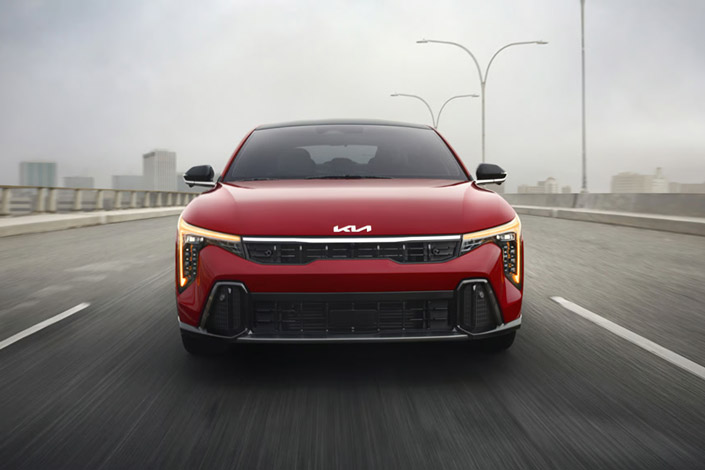
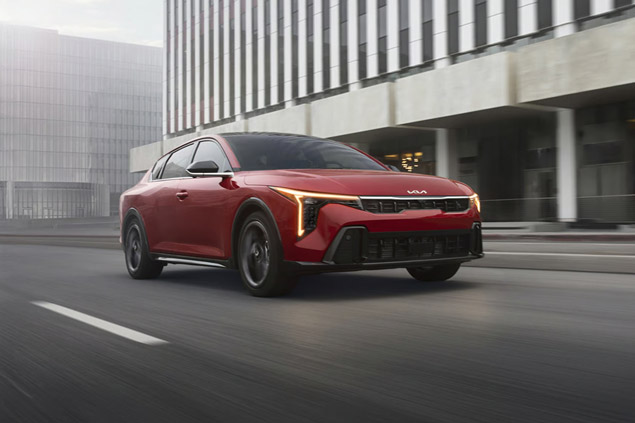
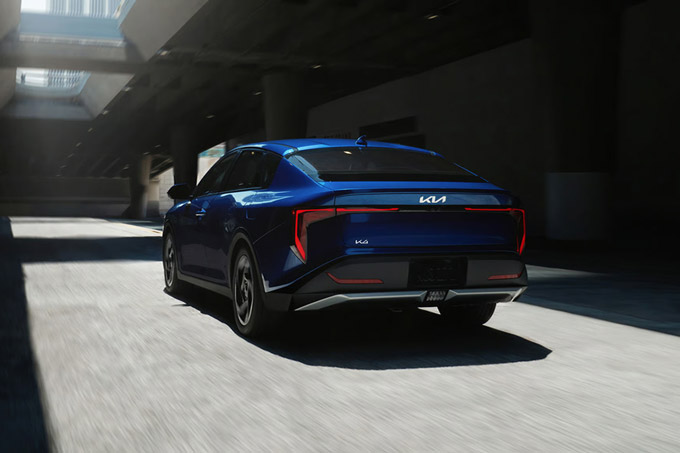
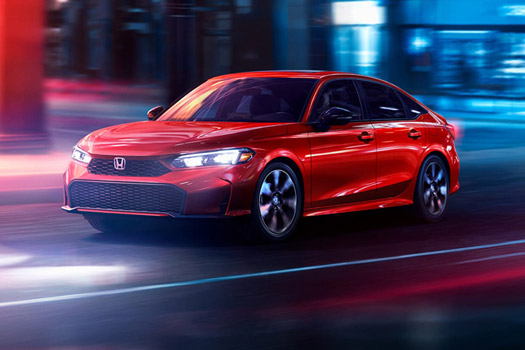
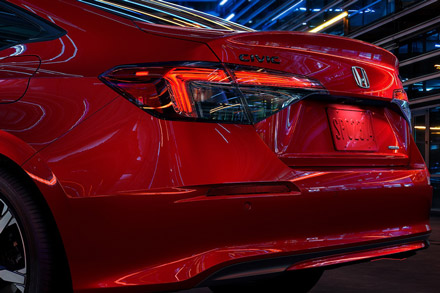
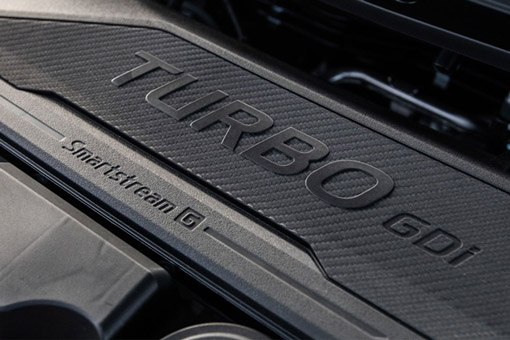
The 2026 Kia K4 offers two powertrain paths. The entry-level version is equipped with a 2.0-liter naturally aspirated engine. It produces a maximum output of 147 horsepower. Peak torque is 179 N·m. This powertrain focuses on smoothness and durability. But if you have demands for acceleration, its 1.6-liter turbocharged engine is the real highlight. This engine squeezes out 190 horsepower. Torque is even higher at 264 N·m. It is mated to an 8-speed automatic transmission specially tuned for high torque. This combination gives the K4 ample confidence when overtaking at highway speeds.
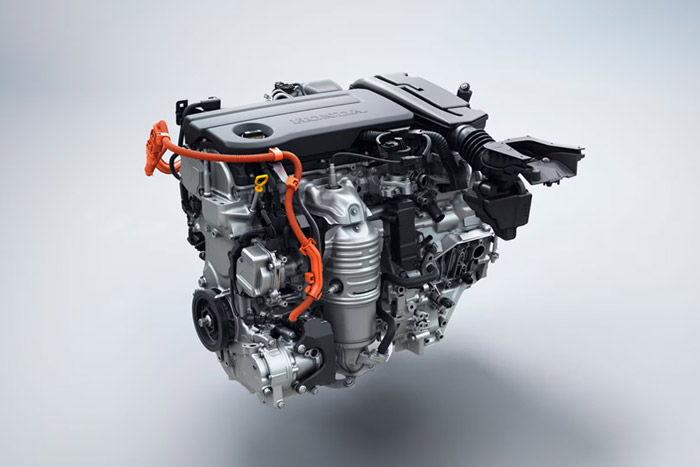
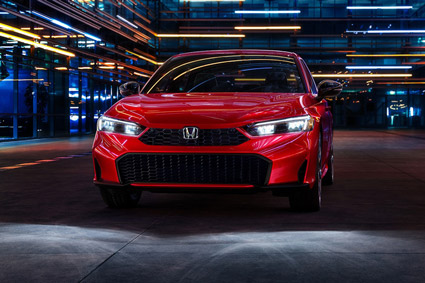
Now let’s look at the Honda Civic. Its entry-level model is also equipped with a 2.0-liter naturally aspirated engine. However, this engine is tuned more aggressively, directly bursting out 158 horsepower. Peak torque is 187 N·m. The figures are noticeably higher than Kia’s 2.0-liter. As for the classic 1.5-liter turbocharged engine, the Civic provides 180 horsepower. Torque is 240 N·m. In terms of transmission, the Civic is equipped across the lineup with an optimized CVT continuously variable transmission. Looking at the data alone, Kia’s 1.6T wins by 10 horsepower, and torque is also more advantageous. But in real-world driving, the Civic’s powertrain response is more agile. Therefore, this is a contest between on-paper specs and real-world experience.
For the 2026 Kia K4’s 2.0-liter version, fuel consumption on city roads is about 8.1 L/100 km. On the highway it can drop as low as 6.2 L/100 km. Combined fuel consumption stabilizes around 7.3 L/100 km. And the powerful 1.6T engine has a combined fuel consumption of roughly 7.6 L/100 km. For a car with 190 horsepower, this result is about average.
In contrast, for the Honda Civic, fuel efficiency has always been its golden calling card. The 2.0-liter version has a combined fuel consumption of only about 6.9 L/100 km. Its 1.5T model performs even more impressively. City fuel consumption is around 7.6 L/100 km, while highway can dip as low as 5.9 L/100 km. The combined figure is extremely eye-catching, at just 6.7 L/100 km. From this, it is clear that the Civic holds a significant advantage in fuel economy. For every one hundred kilometers driven, it can save you over half a liter of gasoline. Over the years, this adds up to a considerable expense.
Kia equips high-spec K4 models with dual 12.3-inch integrated screens. The fully digital instrument cluster is detailed and sharp. The central touchscreen is slightly tilted toward the driver. This system is fully loaded with a sense of technology, and the visual impact is extremely stunning. Wireless Apple CarPlay and Android Auto are both included. The operating smoothness rivals that of flagship smartphones.
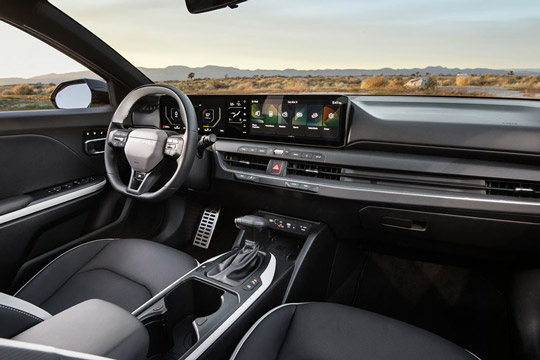
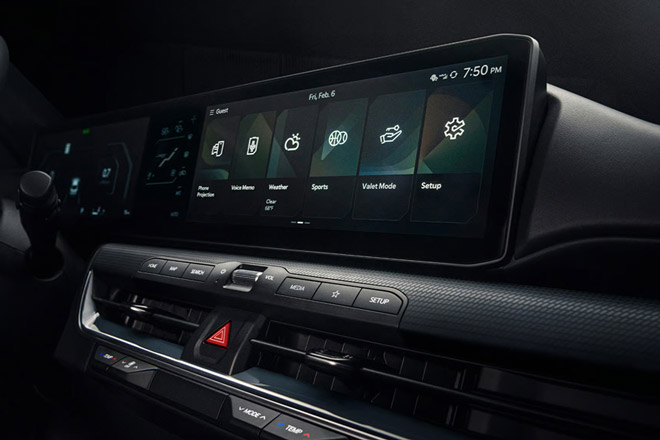
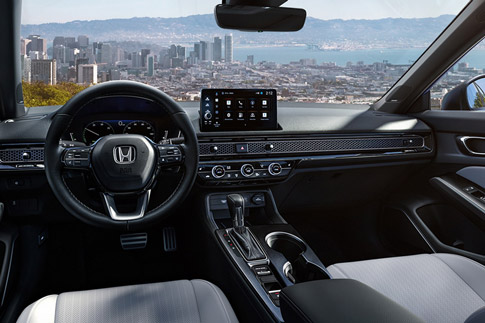
Honda, on the other hand, sticks to a practicality-oriented approach. The Civic mid-grade models are equipped with a 7-inch digital instrument display. As for its central screen, the base model features a 7-inch unit, and even the high-spec models only get a 9-inch screen. Although the system responds quickly and the layout is very logical, objectively speaking, the visual impact brought by the 9-inch screen simply cannot be compared with the K4’s 12.3-inch giant screen. Furthermore, the K4 offers more playfulness in software interaction. The Civic, however, gains the advantage by retaining physical knobs for the air conditioning, making blind operation safer. Simply put, when it comes to screen size and geek flair, the K4 wins outright.
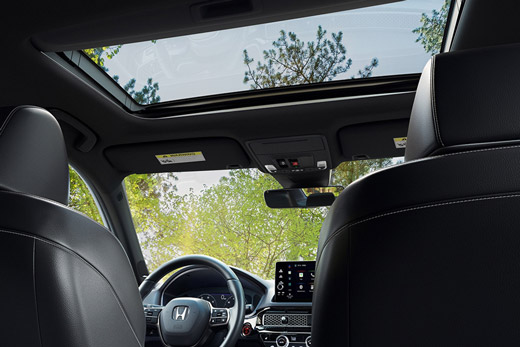
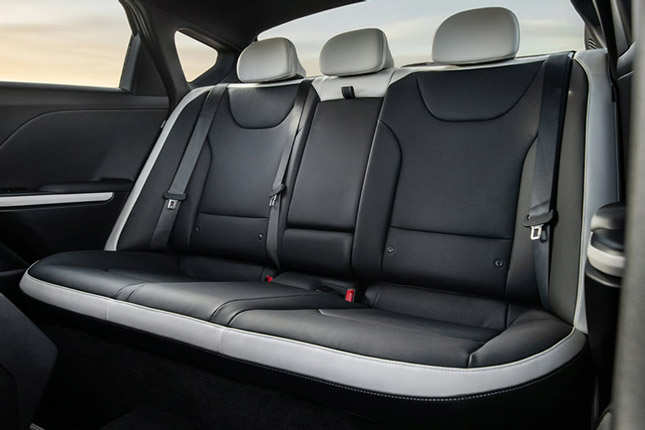
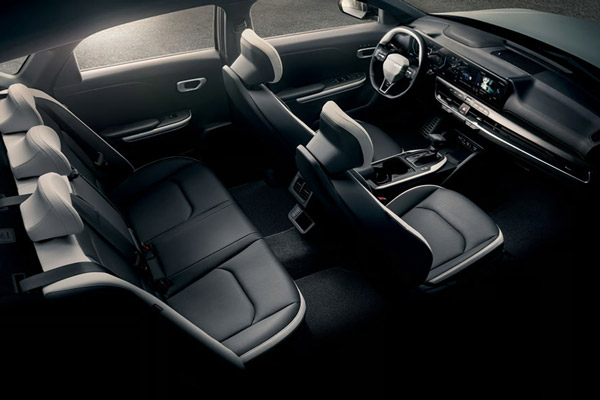
Kia has put considerable effort into the body dimensions of the K4. Its wheelbase reaches 2720 mm. This leaves 925 mm of rear legroom for passengers. Even a passenger standing 1.8 meters tall can easily cross their legs. As for the trunk, the standard volume is 425 liters. The interior shape is regular and neat, easily accommodating three 28-inch check-in suitcases.
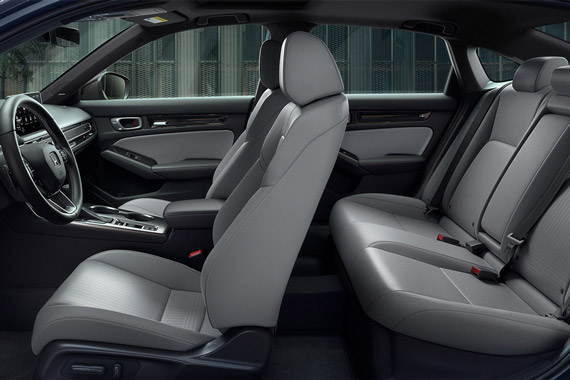
The Honda Civic, meanwhile, is a magician of space utilization. Its wheelbase is slightly longer, reaching 2735 mm. Although the advantage is only 15 mm, Honda has designed the rear seat cushion angle just right. It is not easy to get fatigued on long-distance journeys. The Civic’s trunk volume is 419 liters. That is slightly smaller than the K4 by 6 liters. However, the Civic’s rear seats can fold down flatter. This is actually more convenient when carrying items like skis or long objects. Therefore, in terms of absolute dimensions and trunk capacity, the two are evenly matched. The K4 relies on raw data to make its case, while the Civic wins through meticulous design details.
The Kia K4 is equipped with an upgraded Drive Wise system. This suite includes forward collision warning and automatic emergency braking. It can bring the vehicle to a complete stop at speeds up to 80 km/h. The lane centering assist system behaves very linearly in curves. Full-speed range adaptive cruise control features a stop-and-go function. With the help of a 360-degree surround-view monitor, parking into a space is clear at a glance.
The Honda Civic is equipped with the Honda SENSING safety suite. Its camera adopts wide-angle technology, providing a broader recognition range. It reacts especially sensitively, particularly to pedestrians crossing the road. This system also adds a traffic jam assist function. During low-speed stop-and-go traffic, it greatly reduces driver fatigue. In terms of passive safety, the Civic adopts the ACE body structure. By extensively using high-strength steel, it effectively protects the integrity of the passenger cabin in a collision. It can be said that the active and passive safety of both cars are at the top level of the segment. The Kia is more intuitive in its on-screen warnings, while the Honda is more seasoned in its underlying structural protection.
Finally, we need to turn our attention to the most sensitive closing prices and long-term value.
The pricing of the 2026 Kia K4 is quite aggressive. The entry-level LX trim starts at approximately $21,990. Even if you choose a high-spec version with the dual 12.3-inch screens and the 1.6T engine, the price is mostly around $27,000. In addition, Kia brings out the industry’s longest warranty. It offers a 5-year/60,000-mile basic warranty and a 10-year/100,000-mile powertrain warranty. For young people on a tight budget, this is a huge temptation.
The entry price of the Honda Civic is much firmer. The 2026 Civic LX trim starts at about $25,100. If you want the 9-inch large screen and better audio, the budget is likely to surpass $28,000. The warranty period is also shorter, with only a 3-year/36,000-mile basic warranty. However, the Civic possesses an astonishingly strong residual value. After three years, its second-hand residual value is typically more than 10% higher than that of the K4. At the same time, as we calculated earlier, the Civic saves quite a bit on monthly fuel costs. Therefore, the K4 wins on immediate equipment levels and starting price. The Civic wins in the future stages of selling and maintaining the car.
The 2026 Kia K4 brings a powerful 190-horsepower engine, eye-catching 12.3-inch dual integrated screens, a larger 425-liter trunk, and a highly attractive $22,000 starting price. It is a typical “high specs, low price” challenger. If you pursue the ultimate technology experience, are unwilling to compromise on power, and value a long warranty, choose the Kia K4.
The Honda Civic steadfastly upholds agile handling with 180 horsepower, ultra-low 6.7 L/100 km combined fuel consumption, extremely refined space design, and steadfast second-hand value. Its screen may be smaller, and its starting price may be higher. But every aspect of its design has been refined over time. If you are a driving enthusiast or a savvy long-term owner, the Civic remains the safest and most correct choice.

