


2026 Hyundai Palisade Hybrid Review: A Smarter Three-Row SUV for Families
The Chevrolet Bolt returns with a vengeance after a three-year hiatus, while the Nissan Leaf fights back with a thoroughly reinvented crossover stance. For budget-conscious buyers, these two cars represent an exciting reality: you no longer need to spend forty or even fifty thousand dollars to drive a pure EV with ample range, fast charging, and a strong sense of technology.
So, which one is the best affordable EV — the 2027 Chevrolet Bolt RS or the Nissan Leaf? We break it down across five dimensions: price, range, charging, driving experience, and smart technology.
The Chevrolet Bolt was discontinued in 2023 due to a large-scale recall. Now it’s back, and it returns with unprecedented edge. General Motors has officially confirmed that production of the 2027 Bolt will begin at the Kansas City plant in early 2026.
This is the first time in Bolt history that an RS sport variant is being offered. What you get is a distinctive black grille, gloss black wheels, and an exterior kit brimming with street presence. The Bolt used to be a utilitarian runabout, but today’s Bolt RS is the first that makes people say: this car actually looks pretty good.
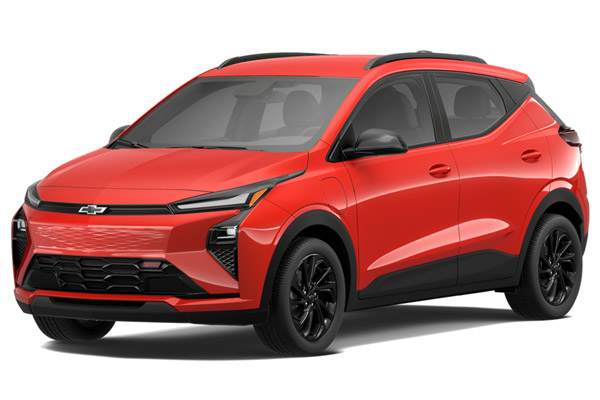
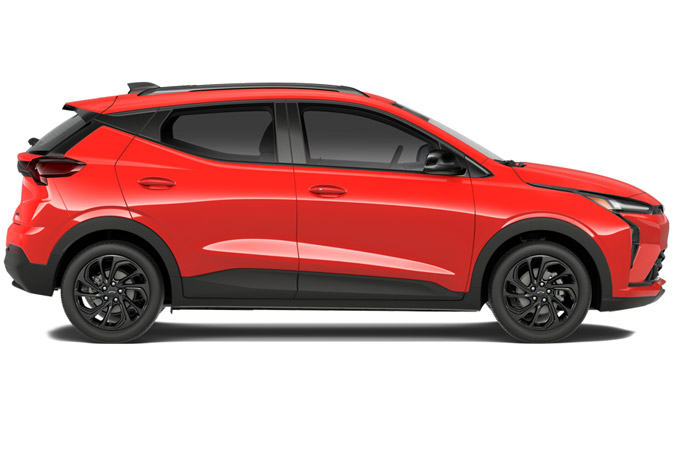
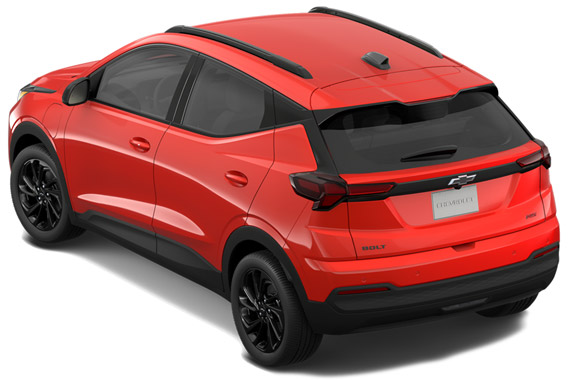
Under the hood, the Bolt RS is powered by GM’s in-house X76 motor, delivering 210 horsepower. EPA-rated range reaches 262 miles (about 422 km), a clear improvement over the 247 miles of the previous generation Bolt EUV. The charging architecture is the core highlight of this generational upgrade — peak charging power jumps to 150 kW, taking the battery from 10% to 80% in roughly 26 minutes. Compared to the old model’s 55 kW ceiling, charging speed has increased by more than 2.5 times. The Bolt also comes standard with a NACS charging port, giving owners direct access to the Tesla Supercharger network.
On the pricing front, the Bolt LT base trim starts at just $28,995 (including destination), while the RS sport trim starts at $32,995. Even when you tick every option box — including the Super Cruise hands-free driving system and the panoramic sunroof — a fully loaded model tops out at only about $38,990. In Car and Driver’s 2027 annual rankings, the Bolt EV earned an excellent 9 out of 10 rating.
The Nissan Leaf is one of the best-selling pure EVs globally, and the 2026 model year represents a ground-up evolution. It abandons the traditional hatchback shape and adopts a far more appealing crossover SUV stance. Although the body is more compact than the outgoing model, the moment you sit inside you feel an unexpected sense of spaciousness and serenity.
The powertrain is split into two versions: a base 174-horsepower unit and a high-output 214-horsepower unit. The higher-powered version, paired with a 75 kWh liquid-cooled battery pack, achieves an EPA-estimated range of up to 303 miles (about 488 km). This is the Leaf’s proudest trump card. Compared to the Bolt, the Leaf delivers a full 41 miles of extra range, which means a great deal for those who frequently undertake long-distance journeys.
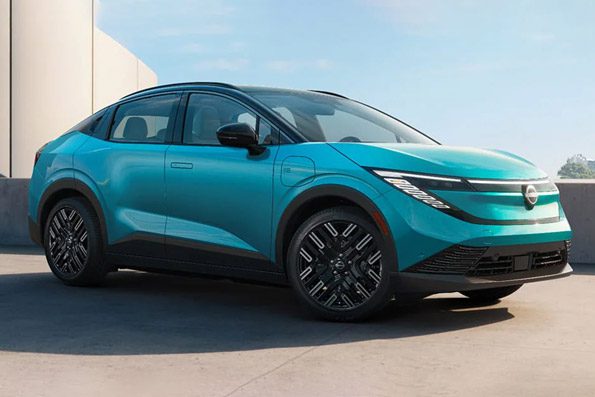
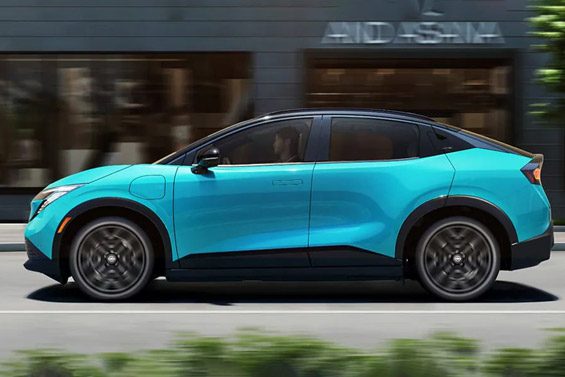
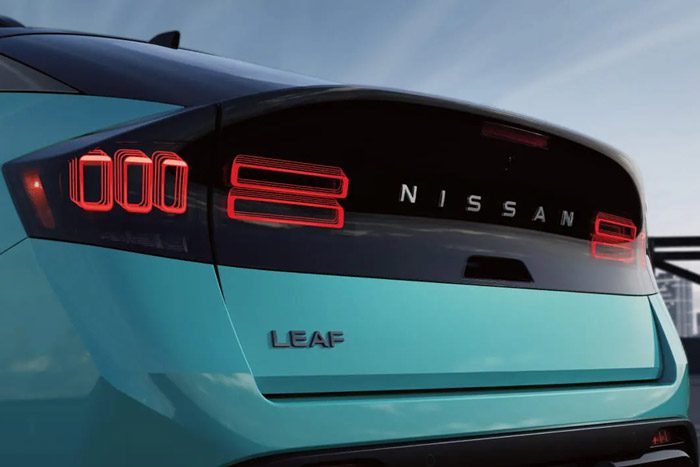
Charging is equally reassuring. The Leaf bids farewell to the controversial CHAdeMO port and adopts a dual-charging-port layout — a NACS fast-charging port on one side and a J1772 Level II slow-charging port on the other. Fast-charging power also supports 150 kW, keeping pace with the Bolt.
The interior is where the Leaf absolutely excels. Dual 12.3-inch screens are standard, and a 14.3-inch main display is optional on higher trims. Nissan also equips the top-spec model with an electronically dimmable panoramic glass roof. The front seats adopt a NASA-inspired Zero Gravity structure, delivering long-distance driving comfort that competitors in the same class simply cannot match.
The 2026 Leaf S+ starts at $31,485 (including destination), the SV+ at $35,725, and the range-topping Platinum+ reaches $40,485. If a cheaper 52 kWh version launches in the future, the price could drop further. It is worth noting, however, that Nissan has indefinitely postponed the market launch of the entry-level S trim; currently only the S+ and above are available.
The starting-price duel crowns the Bolt as the “cheapest new EV in America.” The Bolt LT’s $28,995 precisely undercuts the Leaf S+’s $31,485. Even compared to the Leaf’s most affordable S+ trim currently available, the Bolt still holds a roughly $2,500 price advantage. The Bolt RS’s $32,995 sticker price sits almost neck-and-neck with the Leaf S+, but in return you get a sportier look and a more enjoyable driving experience.
When talking about price, we cannot ignore a force that is reshaping the global market — Chinese cars for sale are profoundly changing the competitive landscape of electric vehicles. These Chinese-made EVs are conquering market share in Europe, Southeast Asia, and Latin America, putting unprecedented pressure on traditional automakers with their highly competitive pricing. That is precisely why General Motors and Nissan are so resolutely betting on the affordable EV segment. Both the Bolt and the Leaf are strategic responses to this new force rising from the East — and the biggest beneficiaries of this rivalry are consumers worldwide.
Range is the most obvious watershed between the two cars. The Leaf’s long-range version leads decisively with a 303-mile EPA rating, while the Bolt provides 262 miles of range. What does a 41-mile difference mean? For most people, it translates to roughly one extra hour of highway cruising.
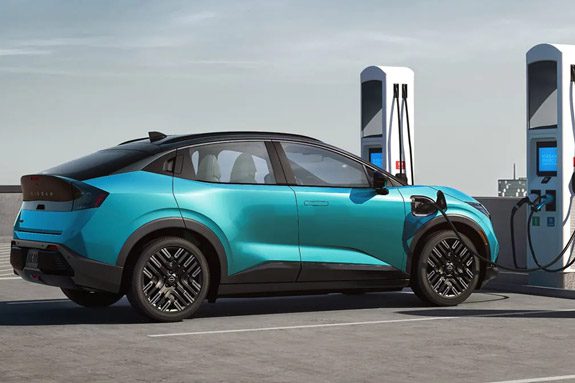
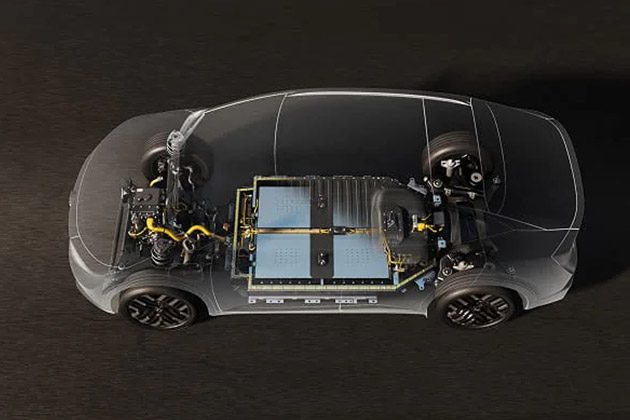
On charging speed, both cars support 150 kW DC fast charging, their on-paper specs looking evenly matched. Yet the Bolt’s advantage lies in its unified NACS port — one port covers everything, whether you are at a fast charger or a Tesla Supercharger station. Meanwhile, although the Leaf also offers a NACS charging option, its dual-port design brings a subtle type of convenience — you can choose the most optimized charging method in different scenarios. As for energy consumption, the Bolt RS uses roughly 17.5 kWh per 100 km. The Leaf’s larger battery pack, due to increased vehicle weight, is expected to have a slightly higher consumption figure.
Gripping the steering wheel of the Bolt RS, you immediately feel its lightness and agility. The 210-horsepower electric motor unleashes all its torque in an instant, and the car’s compact wheelbase feels perfectly at home darting through city streets. One overseas reviewer wrote that after commuting for a week in the San Francisco Bay Area with a Bolt RS, his conclusion was: “Chevrolet has finally understood what urban commuters truly need.”
In contrast, the Leaf’s driving style is an entirely different flavor. Benefiting from a brand-new platform and a precisely tuned suspension system, the Leaf rides with a poised and refined texture, and its cabin quietness is deeply impressive. It does not tease your driving appetite the way the Bolt does, yet it possesses a calm, premium composure — much more like a scaled-down Nissan Ariya. If what you seek is a sense of driving engagement, pick the Bolt. If you want a comfortable long-distance cruiser, the Leaf will be your most loyal companion.
The Bolt features an 11.3-inch central touchscreen and an 11-inch digital instrument cluster, with technology derived from multiple GM electric models. Its most tempting option is the Super Cruise hands-free driving system, one of the highest-rated Level 2+ driver-assist systems currently available in the North American market. The technology package also includes HD Surround Vision and traffic sign recognition.
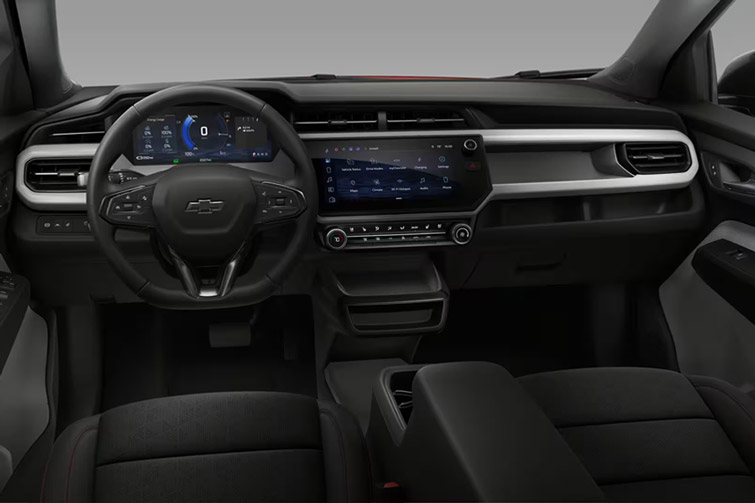
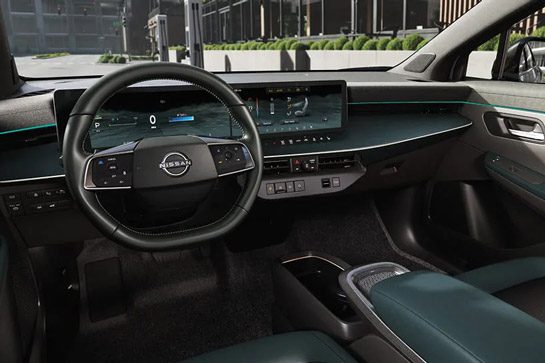
The Leaf, on the other hand, delivers a stronger tech ambiance with its dual 12.3-inch screens or the optional 14.3-inch main display. ProPILOT Assist is standard, and a Google built-in infotainment system is available as an option. Nissan’s profound expertise in seat comfort and interior quality makes the Leaf’s cabin feel closer to a premium experience.
In terms of practicality, the Bolt’s flexible cargo space and roomy interior layout make it a great helpmate for daily life. The Leaf, as a crossover SUV, offers more generous rear headroom and legroom. It is worth noting that the Bolt adopts a front-wheel-drive layout, and the Leaf is also front-wheel-drive; both deliver reassuring traction performance in all kinds of road conditions.
If you consider price your top priority while also craving an energetic car, the Bolt RS is a hard choice to resist. It serves up 262 miles of range, rapid charging speeds, and a mature suite of smart technology at the lowest starting price in America. From a pure value standpoint, it has carved out a height all its own.
But if you put range and ride comfort first, the Leaf may well be the real answer. Its 303 miles of extra-long range is a tough difference to overlook, while its cabin quality and noise control level indeed stand a tier above the Bolt’s. Add the standard ProPILOT Assist system, and the Leaf provides a more convincing case for long highway road trips.
A clear recommendation:
In the end, both cars shine with their own unique brilliance. At a time when competition in the global EV market is growing ever fiercer and Chinese car exports continue to surge ahead at full throttle, the existence of the Bolt and Leaf reminds us of an important truth: well-executed, affordable electric vehicles can still win their own loyal followings through differentiated product strengths. This type of healthy competition is precisely the prerequisite for driving clean-energy mobility into every ordinary household.

