


2026 Hyundai Palisade Hybrid Review: A Smarter Three-Row SUV for Families
Walking on the streets of New Delhi, São Paulo, or Shanghai, you will notice the “Turbo” badge appearing more and more frequently on car hoods. Turbochargers are no longer confined to high-performance sports cars. They have become an undisputed mainstream technology in the global automotive industry. From Europe’s stringent emission regulations to Asia’s congested city roads, from America’s vast interstate highways to Africa’s highland mountains, turbochargers play a key role. At the same time, news of chinese cars for sale frequently makes headlines, and Chinese-made turbocharged models are accelerating to every corner of the world. What are the deeper reasons behind this? This article will thoroughly analyze them for you.
Simply put, engineers use the energy from the engine’s exhaust gas to drive a turbine. The turbine spins a coaxial compressor impeller at high speed via a shaft. The compressor forcefully compresses more air and sends this high-pressure air into the cylinders. As a result, more air combined with more fuel burns, producing powerful performance far beyond the engine’s displacement class. More importantly, this entire process does not directly consume the engine’s own power, truly turning waste into treasure.
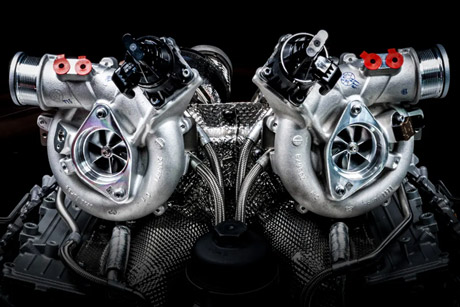
First, governments around the world have enacted increasingly strict emission and fuel consumption standards. Europe’s Euro 6d, China’s China 6b, and the US CAFE regulations are all strongly pushing automakers to find emission-reduction solutions. Therefore, turbocharging technology combined with downsized engines — what we often call downsizing — has become the optimal solution. Automakers boldly replace a bulky 2.5-liter naturally aspirated engine with a 1.5-liter turbocharged engine. This substantially reduces pumping losses and friction inside the engine. Ultimately, the vehicle’s fuel consumption is effectively reduced by 10% to 20%, and carbon dioxide emissions are also significantly decreased. Many Chinese models follow this same logic rigorously. To meet the high environmental requirements of target markets, Chinese brands actively develop high thermal efficiency turbo engines. For example, Chery’s 1.6TGDI engine has a thermal efficiency exceeding 37%, installed in a large number of models exported to Russia and the Middle East. So, when you browse the chinese cars for sale stands at international auto shows, you will quickly find that efficient turbo power is already a core selling point.
Furthermore, turbochargers greatly improve a vehicle’s power delivery characteristics. Naturally aspirated engines typically need to rev very high to achieve peak torque. Turbocharged engines, however, can deliver full maximum torque at extremely low rpm — for example, 1,500 rpm — and form a broad torque plateau. The driver only needs to tap the throttle to instantly get a strong push-back-into-the-seat feeling. Overtaking and merging become much more confident and relaxed. In stop-and-go urban traffic, this strong low-end torque performance significantly enhances driving enjoyment. Consumers in different regions around the world favor this immediate power response. Therefore, whether it is traditional German luxury brands or Japan’s economy-focused compact cars, all have turned to the turbocharging camp. Chinese SUVs and sedans are naturally no exception. Geely, Great Wall and other brands have developed high-performance turbo engines specifically for global markets, allowing overseas users to enjoy strong and reliable power at very affordable prices.
There is another very practical reason automakers favor turbochargers: cost. Producing a brand-new four-cylinder turbocharged engine is often cheaper than making an old-style large-displacement six-cylinder engine. At the same time, consumers directly benefit from lower displacement taxes and vehicle and vessel taxes. In European and Chinese markets, engine displacement is directly linked to tax rates. The tax burden on a 2.0T model is far lower than that on a 3.0L naturally aspirated model. This not only saves buyers money in the long run, but also makes the price competitiveness of chinese cars for sale in overseas markets even stronger. For instance, in South Africa and Chile, Chinese brand mid-size pickups adopt advanced 2.0T diesel engines, perfectly replacing traditional 3.0L diesel engines, while offering more attractive prices. The transition to turbocharging technology actually creates a win-win situation for both manufacturers and users.
An even more interesting point is that turbochargers help vehicles easily overcome altitude sickness. In regions above 2,500 meters in elevation, the air becomes thin, and naturally aspirated engines can lose 30% or more of their power. However, the turbocharging system, through forced induction, can significantly compensate for the oxygen content in the intake air. As a result, in the Andes mountains of Latin America and highland markets of Southeast Asia, turbocharged models are extremely popular. Chinese cars for sale in Peru, Bolivia, and other Andean countries have specifically strengthened high-altitude calibration for their turbocharged engines. Consequently, these cars perform very reliably in these special regions, accumulating an excellent reputation. Similarly, in extremely cold environments, the fast warm-up characteristics of turbo engines are also unanimously praised by drivers.
In the past, many consumers worried that turbochargers had a short lifespan, noticeable lag, and high maintenance costs. However, these stereotypes are long outdated. Today, automakers widely adopt new materials and cutting-edge electronic control technologies. For instance, the large-scale application of electronic wastegates, variable geometry turbines, and twin-scroll technology has almost completely eliminated turbo lag. At the same time, integrated exhaust manifolds significantly speed up engine warm-up and enhance overall reliability. A modern turbocharger can easily last as long as the engine itself, requiring virtually no extra special maintenance. This tremendous progress allows global users to choose turbo models with confidence. Chinese models commonly offer a powertrain warranty of up to 5 years or 100,000 kilometers, further dispelling market doubts. Therefore, turbocharging technology also maintains good residual values in the used car market over the long term.
In recent years, China’s automotive industry has achieved rapid leapfrog development. Chinese brands not only dominate the domestic new energy vehicle market, but have also made remarkable achievements in the core area of internal combustion engines. Chinese cars for sale have grown into a formidable and undeniable force in the global auto market. In 2023, China’s automobile exports ranked first in the world. Among these exported vehicles, the proportion of turbocharged models is extremely high. The reason is simple: they perfectly meet the broad demands of the vast majority of global markets. Star products such as Great Wall’s Haval H6, Geely Boyue, and SAIC’s MG HS all feature efficient turbo power. The 1.5T and 2.0T engines equipped in these models perform exceptionally well in terms of horsepower, fuel consumption, and durability. Thus, the wave of chinese cars for sale is accelerating the rapid spread of turbocharging technology in Southeast Asia, the Middle East, Africa, and Eastern Europe. Even consumers in Australia and Mexico can easily buy affordable and capable Chinese turbo models. This healthy competition is also continuously pushing other international auto giants to keep upgrading their own turbo technologies.
You might ask whether turbochargers will soon be phased out with the strong rise of electric vehicles. The reality is far from it. Worldwide, the proportion of pure electric vehicles in the total car parc is still limited. In mainstream hybrid technologies such as plug-in hybrids and range-extender electric vehicles, the turbocharged engine is an indispensable and highly efficient cornerstone. Moreover, the distribution of charging infrastructure globally is highly uneven. In many inland and remote regions, fuel vehicles will remain the absolute mainstay for a considerable time to come. Therefore, turbochargers still possess vast vitality. Chinese cars for sale also fully demonstrate the characteristic of diversified progress: new energy vehicles and traditional internal combustion engine vehicles work together to meet the differentiated needs of different regions. Hybrid systems from manufacturers such as Chery and BYD, paired with highly efficient turbo engines, achieve astonishingly low fuel consumption and are currently selling well in many overseas countries.
If you are considering buying a car equipped with a turbocharger, focus on the following points: be sure to check the engine’s thermal efficiency and emission standards; take a test drive to personally feel the actual extent of turbo lag; thoroughly understand the powertrain warranty policy; and make your final decision based on your usual real-world driving environment.
From improving combustion efficiency to unleashing pure driving pleasure, from conquering high-altitude regions to reducing costs for both consumers and manufacturers, the turbocharger injects extremely powerful vitality into the modern automobile.

