


2026 Hyundai Palisade Hybrid Review: A Smarter Three-Row SUV for Families
What are the differences between automatic and manual transmissions in daily use? This is a question many people want to understand when buying a car. This article will take you deep into their core differences from the perspective of daily use. At the same time, we will also look at how the wave of Chinese cars for sale globally is influencing this choice.
First of all, an automatic transmission makes driving extremely simple. You simply shift into D, and the vehicle changes gears by itself. Your right foot controls the accelerator and brake, while both hands remain on the steering wheel at all times. Daily commuting therefore becomes completely stress‑free.
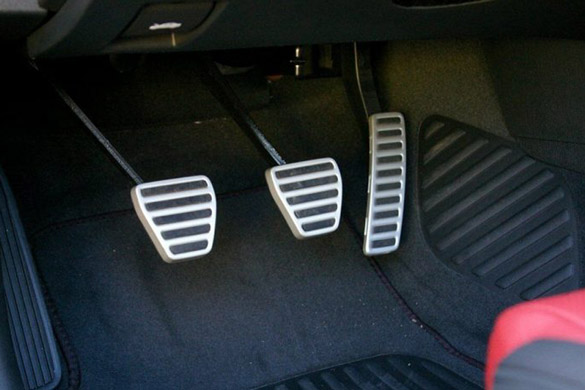
By contrast, a manual transmission requires more effort. The driver must depress the clutch with the left foot while coordinating gear changes with the right hand. Especially in stop‑and‑go traffic, this sequence has to be repeated over and over again. Many beginners find it very troublesome.
However, manual transmission enthusiasts appreciate this sense of involvement. They believe that only by personally controlling the revs and torque can one experience true driving. That said, there is no denying that for most people, the automatic holds an absolute advantage in convenience.
In the past, manual transmissions were usually more fuel‑efficient. The torque converter in older‑style automatics caused power losses. As a result, budget‑conscious buyers around the world used to prefer manual gearboxes.
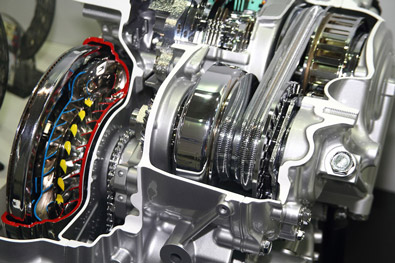
Modern automatic transmissions, however, have completely changed this situation. A CVT continuously variable transmission can keep the engine running in its most efficient range at all times. Advanced 8‑speed or 10‑speed automatics also shift far faster than any human can.
In fact, the fuel consumption of many new automatic models is now lower than that of their manual counterparts. This has triggered a shift in perception even in traditionally manual‑leaning markets like Europe. Meanwhile, we are seeing many Chinese cars for sale overseas, and their efficient DCT dual‑clutch automatic transmissions further blur the fuel‑economy gap.
Manual gearboxes are simpler in structure. Internally, they are purely about gear meshing. Consequently, repair costs are usually lower and they tend to be more durable. Replacing the clutch disc is the most common maintenance item, and it is not expensive.
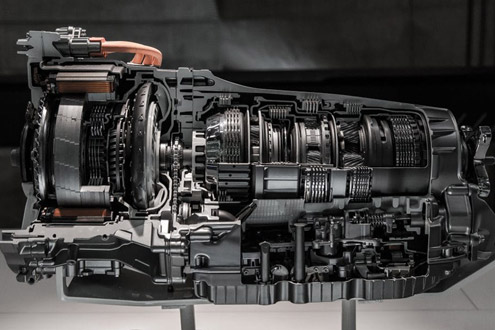
Automatic transmissions are far more sophisticated. They contain complex hydraulic systems and electronic control units. Once a fault occurs, the repair bill can be hefty. Nevertheless, the service life of today’s automatic transmissions has been greatly extended. As long as the specified fluids are changed on time, most can last as long as the vehicle itself.
Furthermore, workshop equipment is improving all over the world. Repairing an automatic transmission is no longer as difficult as it was a decade ago. In addition, many Chinese cars for sale in Southeast Asia, the Middle East, and Latin America come with extra‑long warranties, removing users’ concerns about the reliability of automatic gearboxes.
In daily driving, an automatic gearbox greatly reduces fatigue. During the morning rush hour, you do not need to constantly work the clutch. You can focus more of your attention on road safety. It therefore becomes the ideal companion for urban dwellers.
Conversely, a manual transmission offers a stronger sense of control. You directly decide in which rev range the engine delivers its power. On winding mountain roads or when overtaking, the thrill of downshifting and feeding in the throttle is hard to replace. It is a form of communication between driver and machine.
However, faced with severe traffic congestion in major cities around the globe, pragmatism often wins out. More and more young people are putting ease and comfort first. This is also driving the soaring global adoption rate of automatic transmissions.
The differences in choices between regions are quite interesting. The US market has long been dominated by automatic transmissions, which account for over 95%. European consumers used to stick with manuals, although that share is declining rapidly. Japan and South Korea fully embraced automatics a long time ago.
Within this trend, the influence of Chinese cars for sale cannot be overlooked. The SUVs and saloon cars exported by Chinese brands are highly aligned with the demand for automatic transmissions. They usually come with a smooth CVT or a responsive dual‑clutch gearbox as standard. This approach has directly reshaped the consumer landscape in many emerging markets.
For instance, in Chile or Saudi Arabia, a family on a limited budget can now easily own an automatic multi‑purpose vehicle. They discover that these models from China offer extremely high specifications at very competitive prices. As a result, the manual transmission is no longer the only economical choice in those markets.
In the end, the choice depends on your daily driving scenario and what your heart desires. If you cross a severely congested city every day, an automatic will save your left leg and your patience. If you enjoy the driving pleasure that comes with every gear change, then the manual remains captivating. Additionally, you should also consider whether other family members will be driving the car.

