


2026 Hyundai Palisade Hybrid Review: A Smarter Three-Row SUV for Families
Drivers around the world ask the same question every winter: Do I really need to warm up my car? And if so, for how long? Some seasoned drivers insist on idling in place for a full ten minutes, while younger motorists simply start the engine and drive off immediately. So, what is the truth? This article draws on the latest research from 2026 and data from professional institutions to help you thoroughly understand the correct way to warm up your car in cold weather.
The practice of idling in place to warm up the car originates from the carburetor era of the 1970s and 1980s. Back then, carburetors could not reliably atomize gasoline at low temperatures, causing engines to stall or run rough, so drivers developed the habit of warming up the car on the spot.
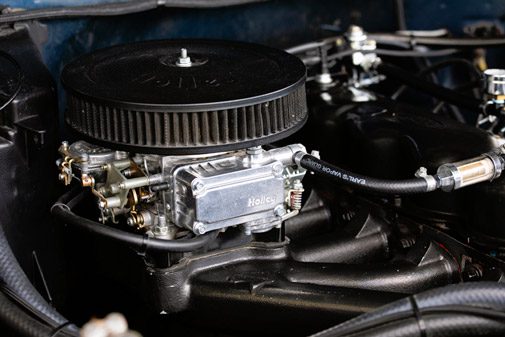
However, modern automobiles have undergone a complete transformation. Since the 1990s, nearly all mass-produced vehicles worldwide have switched to electronic fuel injection systems. This system automatically adjusts the amount of fuel injected based on ambient temperature, enabling stable operation even in environments dozens of degrees below zero. At the same time, engine manufacturing precision has greatly improved, and the widespread adoption of fully synthetic motor oils has rendered low-temperature fluidity a non-issue.
In simple terms: most modern cars no longer require prolonged idling in place for warm-up. The American Automobile Association (AAA) states even more bluntly that the notion that “warming up your car in cold weather improves performance” is a “myth.”
Many people assume that idling to warm up the engine protects it, but the opposite is true—prolonged idling in place causes multiple forms of harm:
Increased Carbon Deposits. When idling in place, the engine operates under low load and low RPM, leading to incomplete fuel combustion and the formation of carbon deposits. These deposits accumulate on cylinder walls, piston crowns, and intake valves, resulting in reduced power and higher fuel consumption.
Accelerated Engine Wear. Although RPM is low during idle, the circulation speed of the oil pump is correspondingly slower, failing to fully coat all internal engine components. Research conducted by the China Automotive Engineering Research Institute in 2025 indicates that during stationary idling, the transmission oil pump operates at low speed, providing insufficient lubrication for internal parts and actually accelerating wear.
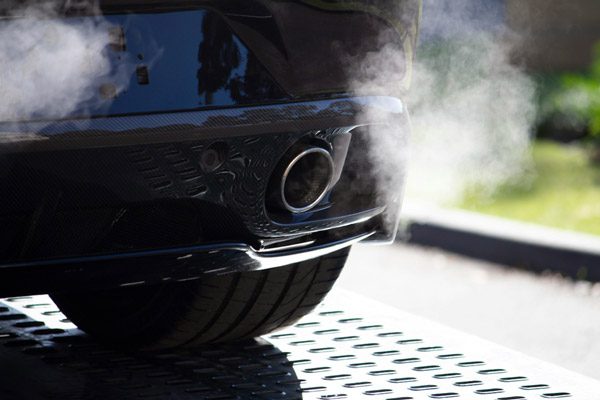
Increased Fuel Consumption and Emissions. Idling in place for more than one minute can cause fuel consumption to surge by over 30%. Measured data from German engineers show that in low-temperature environments, the ECU enriches the fuel mixture, while the engine load rate during stationary idling is extremely low, resulting in abysmal fuel efficiency.
Even more surprising, research data reveals that in a -20°C environment, the amount of engine wear after idling in place for three minutes is 47% higher than when driving gently right away. This means that the more you try to “baby” it, the more harm you cause.
After starting the engine, do not shift into gear and drive off immediately. Give the oil a moment to circulate—about 30 seconds is sufficient. You can use this time to fasten your seatbelt, adjust the mirrors, and set up your navigation, so no time is wasted.
The official recommendation from AAA is even more concise: idle only as long as it takes to fasten your seatbelt.
This is the most critical step. Scientific research consistently proves that the engine reaches operating temperature fastest under light load driving, not while idling in place.
After about 30 seconds, shift into gear and drive at low speed. Before the engine is fully warmed up, avoid stomping on the accelerator or repeatedly accelerating and decelerating rapidly. Keep vehicle speed below 40 km/h and engine RPM below 2500.
Once the temperature gauge needle rises to the middle position, the engine has entered its optimal operating state. At this point, you can drive normally and confidently turn on the heater.
The following recommendations synthesize the latest 2026 data from the EPA, AAA, and Bosch:
| Ambient Temperature | Recommended Idle Time | Notes for Gentle Driving Phase | Estimated Time to Operating Temperature |
| ≥10°C | 0 seconds, drive immediately | No special restrictions | 1-2 minutes |
| 0°C to 9°C | 15-20 seconds | RPM ≤2500, avoid hard acceleration | 3-5 minutes |
| -10°C to -1°C | 25-35 seconds | RPM ≤2200, maintain 30-45 km/h | 5-8 minutes |
| ≤-11°C | 40-50 seconds | RPM ≤2000, use lower gears | 8-12 minutes |
In extremely cold regions such as Northeast China or Xinjiang (temperatures below -30°C), it is advisable to wait about half a minute to ensure the oil achieves basic fluidity before starting to drive gently.
This question is often overlooked. The answer is: Yes, but the approach is completely different.
Electric vehicles do not require engine warm-up in the traditional sense. However, in low-temperature environments, the chemical activity of lithium batteries decreases significantly, internal resistance increases, leading to reduced driving range and lower charging efficiency.
Most modern new energy vehicles are equipped with battery preheating systems that automatically heat the battery during low-temperature starts. You do not need to idle and wait like with a gasoline car, but it is recommended to drive gently at low speeds for a period after startup to allow the battery to gradually reach its ideal operating temperature.
Beyond proper warm-up techniques, vehicle maintenance in cold weather is equally important:
Check the Battery. Low temperatures reduce battery activity, making it the primary cause of winter starting failures. Regularly check the battery’s condition and ensure terminals are clean.
Check the Coolant. Ensure the coolant is at the proper level; a low level can cause engine overheating or overcooling.
Use Winter-Grade Engine Oil. Choose low-viscosity oil (e.g., 0W-20), which flows better at low temperatures and can reduce cold-start friction resistance by 18%.
Check Tire Pressure. For every 10°C drop in temperature, tire pressure decreases by approximately 0.07 bar. Properly inflating tires in winter helps improve fuel economy and driving safety.
Today, Chinese automotive brands are going global at an unprecedented pace. In 2025, China’s total annual vehicle exports reached 7.098 million units, a year-on-year increase of 21.1%, with the influence of Chinese brands in the global market continuing to strengthen. Brands such as BYD, Chery, SAIC, and Geely have achieved record sales in overseas markets, while China’s new energy vehicle exports grew by 120% year-on-year. At the same time, the export of used cars has also seen explosive growth; in 2024, China exported used cars to over 160 countries and regions. It can be said that chinese cars for sale has become a truly global phenomenon.
Whether you drive a meticulously engineered German vehicle, a fuel-efficient Japanese car, an American muscle car, or an intelligent electric vehicle from China, the principles of scientific maintenance are universal. Mastering the correct winter warm-up method not only extends engine life and saves on fuel costs, but also reduces unnecessary emissions, which is better for the planet as well.
Next time you face a cold morning, do not sit idling foolishly for ten minutes. Start the engine, fasten your seatbelt, and pull away gently—that is the most scientific warm-up approach for 2026.

