


2026 Hyundai Palisade Hybrid Review: A Smarter Three-Row SUV for Families
In the global three-row SUV market, two models are locked in an intense battle. On one side is the all-new, first-ever hybrid Kia Telluride Hybrid. On the other side stands the Toyota Grand Highlander Hybrid. It is built upon Toyota’s decades of hybrid expertise. For consumers worldwide who prioritize space, fuel economy, and family practicality, which SUV is the wiser choice? This article provides a comprehensive comparison across multiple dimensions. These dimensions include powertrain performance, fuel efficiency, interior space, pricing and value, and warranty coverage.
In the global mid-size to large three-row SUV segment, these two vehicles are genuine heavyweights. Specifically, in 2025, Toyota sold 136,801 units of the Grand Highlander across the United States. The Kia Telluride followed closely with 123,281 units. Moreover, the Kia Telluride has undergone a complete redesign. It introduces a hybrid powertrain for the first time. Consequently, this competition has intensified further. Their contest in the global SUV market also influences trends in emerging Southeast Asian automotive markets. After all, these markets rely heavily on imported vehicles.
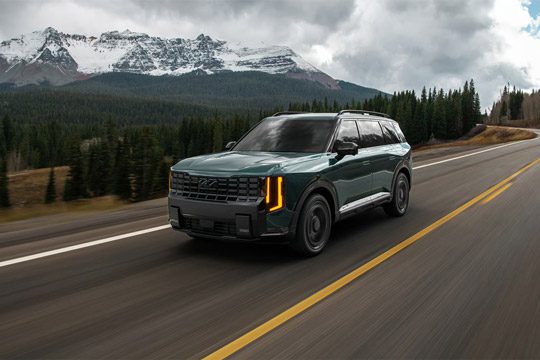
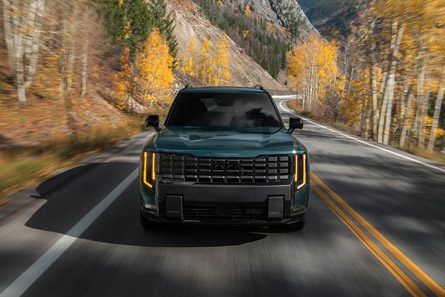
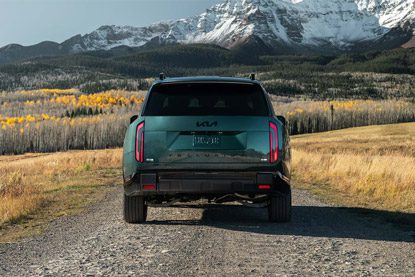
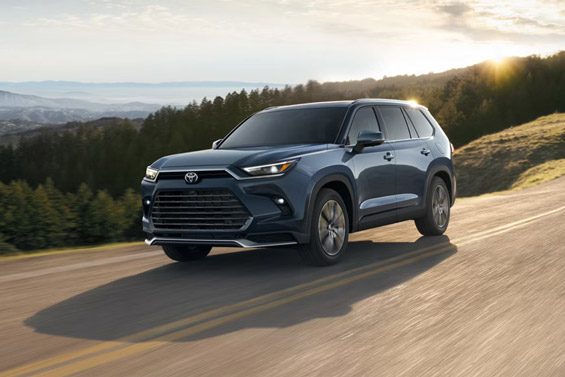
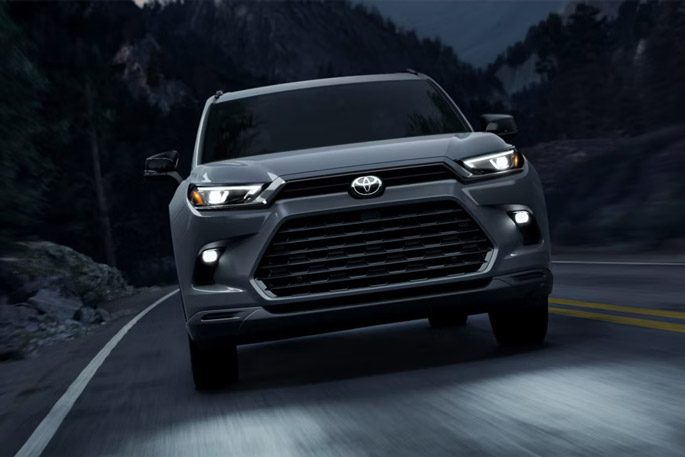
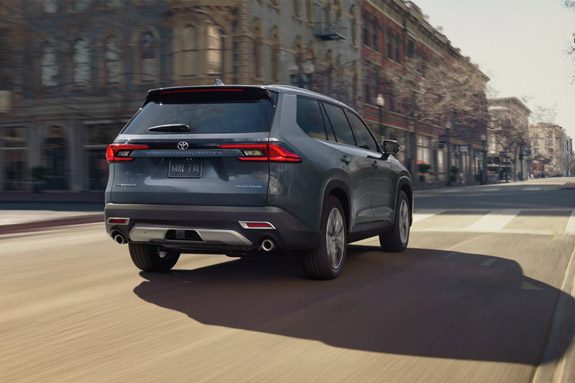
Additionally, it is worth noting the positioning of the all-new Telluride Hybrid. It is set to compete directly with the Toyota Grand Highlander Hybrid. It also targets the Hyundai Palisade Hybrid and even Kia’s own EV9 electric three-row SUV. In this contest, each model has its own strengths. Ultimately, the choice depends on your priorities.
The 2026 Kia Telluride has completely bid farewell to the old 3.8L V6 engine. Instead, it offers two powertrain options. These are a 2.5T turbocharged gasoline version and a hybrid version. The hybrid model features a 2.5-liter turbocharged four-cylinder engine. It is paired with dual electric motors. This setup delivers a combined system output of 329 horsepower (approximately 245 kW). Peak torque reaches 460 N·m (approximately 339 lb-ft). Furthermore, this powertrain is mated to a 6-speed automatic transmission. It comes standard with all-wheel drive.
Real-world testing data shows impressive acceleration. The Kia Telluride Hybrid goes from 0 to 100 km/h (0-62 mph) in just about 4.9 seconds. This is a stunning performance for a vehicle exceeding five meters in length. It also weighs nearly 2.2 tons. Power delivery is virtually jerk-free during urban commutes. At the same time, the hybrid system provides immediate benefits. Enhanced mid-to-low speed torque and quieter operation are unmistakable.
In contrast, Toyota offers two distinctly different hybrid powertrains for the Grand Highlander Hybrid.
In terms of powertrain variety, Toyota is clearly more flexible. However, many buyers seek the optimal balance between performance and efficiency. For these buyers, the Telluride Hybrid’s single 329-horsepower system is a compelling alternative. It significantly outperforms Toyota’s standard hybrid version in power output. Simultaneously, it delivers far superior fuel economy compared to the Hybrid MAX version.
Fuel efficiency is one of the primary concerns for family SUV buyers. Below are the EPA combined fuel economy figures:
| Model | Combined Fuel Economy (mpg) | Combined Range (approx.) |
| Kia Telluride Hybrid | Approx. 30.9 mpg (7.6 L/100km) | Approx. 966 km (600 miles) |
| Toyota Grand Highlander Hybrid (Standard) | 36 mpg (approx. 6.5 L/100km) | Approx. 965 km (600 miles) |
| Toyota Grand Highlander Hybrid MAX | 27 mpg (approx. 8.7 L/100km) | Approx. 700 km (435 miles) |
The data indicates a clear leader in efficiency. The standard Toyota Grand Highlander Hybrid leads the pack with a combined fuel economy of 36 mpg. This is roughly 14% more fuel-efficient than the Telluride Hybrid’s 30.9 mpg. On the other hand, if you opt for Toyota’s more powerful Hybrid MAX version, fuel economy drops to 27 mpg. That figure falls below that of the Telluride Hybrid.
Precisely for this reason, analysts highlight the Telluride Hybrid’s balance. It offers the most competitive combination of power and fuel efficiency. It does not sacrifice fuel economy like the Hybrid MAX. Yet, it provides a significantly more robust driving experience than Toyota’s standard hybrid version.
Both vehicles offer 7- or 8-passenger seating configurations. They accommodate up to eight occupants. Nevertheless, they differ in the distribution of interior space.
| Row | Kia Telluride | Toyota Grand Highlander |
| Second Row | 42.4 inches | 39.5 inches |
| Third Row | 31.4 inches | 33.5 inches |
The Kia Telluride offers more generous second-row legroom (42.4 inches). Consequently, it is highly suitable for installing child safety seats. It also allows adult passengers to travel comfortably over long distances. Meanwhile, the Toyota Grand Highlander holds an advantage in third-row space (33.5 inches). An adult standing 1.75 meters (approximately 5’9″) tall will find the space reasonably spacious. Both legroom and headroom are adequate when seated in the third row.

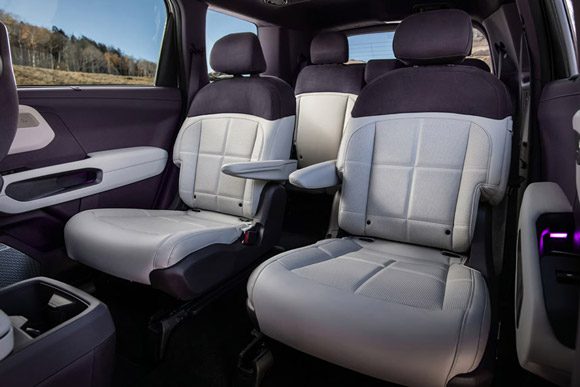
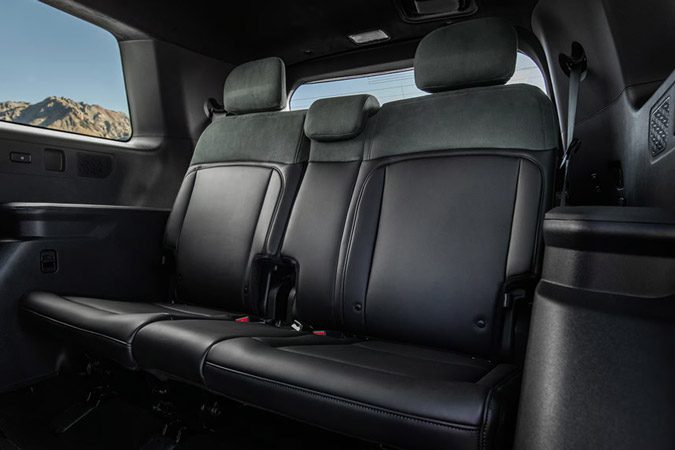
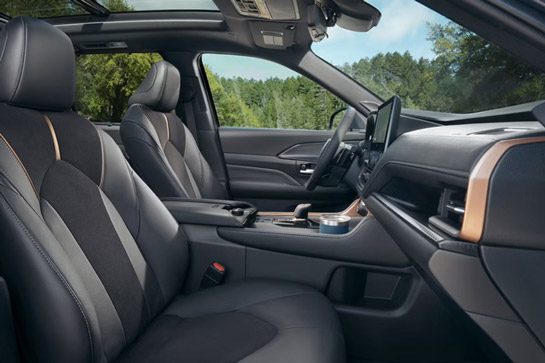


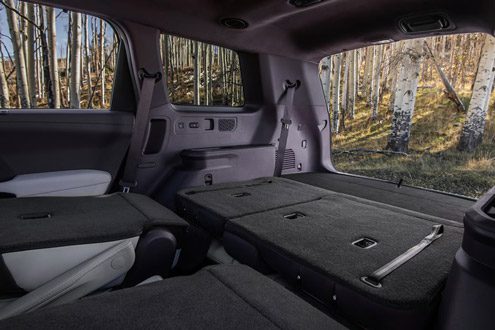

The practical choice hinges on your specific usage scenarios. For instance, if you frequently utilize the third row, Toyota’s advantage in third-row space is evident. Conversely, if you often travel with a full load of passengers, the Kia may be more suitable. You will benefit from the more spacious second-row accommodations.
The Kia Telluride has historically maintained a pricing advantage over Toyota. The 2027 Telluride has a starting price of approximately $40,735 (including destination charge). Meanwhile, the 2026 Toyota Grand Highlander starts at around $41,360. Regarding hybrid versions, the Grand Highlander Hybrid starts at approximately $45,010. The top-tier Hybrid MAX Platinum trim reaches as high as $59,575. Final pricing for the Kia Telluride Hybrid has not yet been officially announced. However, it is expected to be noticeably lower than a comparably equipped Grand Highlander Hybrid MAX.
More importantly, Kia consistently maintains a price advantage at equivalent equipment levels. As a result, for budget-conscious family buyers, Kia clearly provides a more accessible entry point.
This represents one of the most significant advantages of the Kia Telluride over the Toyota. Kia provides the following warranty coverage for the Telluride:
In contrast, Toyota’s warranty coverage is limited to:
Kia’s 10-year powertrain warranty is nearly twice the duration of Toyota’s coverage. Therefore, for families planning long-term vehicle ownership, this difference translates into substantial economic value. It also provides significant peace of mind.
If you occasionally venture off paved surfaces, Kia offers a unique option. It is an option that Toyota cannot match. Specifically, this is the X-Pro off-road trim.
The Telluride X-Pro features a generous 9.1 inches of ground clearance. By comparison, all Toyota Grand Highlander trims have just 8.0 inches. Additionally, it includes all-terrain tires and all-wheel drive. It also features an electronic locking differential and terrain driving modes. Front and rear tow hooks are included. It even includes a ground view monitor. This helps detect obstacles while off-roading.
In contrast, Toyota prefers to delegate off-road duties to other SUV models. For example, the 4Runner and Sequoia handle those tasks. The Grand Highlander lineup does not include an off-road-oriented version. Consequently, if you are a weekend camper, the Telluride X-Pro is compelling. The same is true if you occasionally need to traverse unpaved roads. Its advantages are highly compelling in these situations.
Both vehicles demonstrate excellent safety performance. The Kia Telluride has earned the IIHS TOP SAFETY PICK+ highest safety rating. It also received a 5-Star Overall Safety Rating from NHTSA. Similarly, the Toyota Grand Highlander comes standard with Toyota Safety Sense 3.0. This is a comprehensive suite that includes automatic emergency braking with pedestrian detection. It also features lane-keeping assist, adaptive cruise control, automatic high beams, and traffic sign recognition.
In this regard, the two vehicles are evenly matched. Both are safe choices for family transportation.
Let us return to the question posed at the beginning of this article. Between the Kia Telluride Hybrid and the Toyota Grand Highlander Hybrid, which SUV comes out on top? The answer depends entirely on what you value most.
Choose the Kia Telluride Hybrid if you:
Choose the Toyota Grand Highlander Hybrid if you:
On a global scale, this competition will continue to drive the evolution of the three-row hybrid SUV market. Regardless of which model you choose, you will acquire a spacious, fuel-efficient, and well-equipped modern family vehicle. Ultimately, the final decision rests in the hands of your specific driving needs and lifestyle.

