


2026 Hyundai Palisade Hybrid Review: A Smarter Three-Row SUV for Families
Some engine sounds are etched into your memory forever. The flat-plane crank howl of the Ferrari 458 Italia, the distinctive warble of Audi’s five-cylinder, and then — when the V10 in the BMW E60 M5 screams all the way to 8,250 rpm, that ferocious, piercing, ten-cylinder shriek. Once you’ve heard this sound, you will never forget it.
This is no ordinary sports saloon. This is a mechanical masterpiece that injected the soul of an F1 car into a four-door executive sedan. The E60-generation BMW M5 was born in a unique era when engineers could recklessly stuff racing technology into a luxury family car. It defined the super saloon category, and more than 20 years later, it still drives enthusiasts around the world absolutely wild.
This article will present a complete portrait of this V10 legend, covering performance, engineering, driving experience, reliability, and collector value — and much more.
The story begins in the mid-2000s. At the time, BMW was a major force in Formula 1, with the V10-powered BMW-Sauber cars going wheel-to-wheel with Ferrari on the circuit. BMW’s marketing department seized the opportunity — why not bring F1 technology and spirit to the road?
So the M division made a bold, almost insane decision: build a V10 engine completely from scratch, and stuff it into a luxury executive saloon. This was the very first engine in M division history to be designed independently from the ground up — every previous M engine had been a heavily reworked version of a regular BMW production engine.
The final creation was the S85B50 — a 5.0-litre naturally aspirated V10 whose technology originated in F1, and which was built on the very same production line as BMW’s Formula 1 racing engines. You have to remember, an F1 engine back then only had to survive a single race weekend, yet BMW set out to turn such technology into a road car engine capable of running reliably for hundreds of thousands of kilometres. That kind of ambition, seen through the lens of today’s emissions regulations and cost constraints, is almost unimaginable.
As widely remarked by global media, this is “a super saloon the likes of which had never been seen before, and will never be seen again.”
The S85 engine shares deep DNA with the V10 racing engines of the BMW Williams F1 team. Their cylinder blocks are cast from a hypereutectic aluminium-silicon alloy and feature a bedplate design to reduce weight while dramatically increasing rigidity. Even more astonishingly, both engines — racing and road-going — came from BMW’s same foundry in Landshut. You could say that beneath every E60 M5 owner’s right foot flows pure F1 blood.
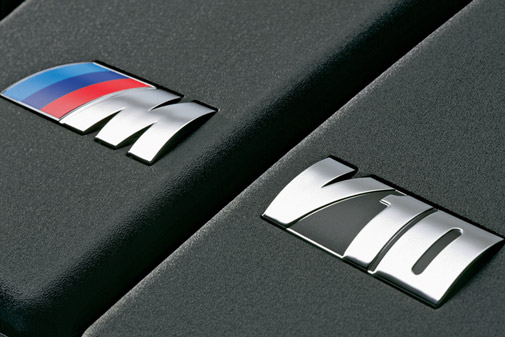
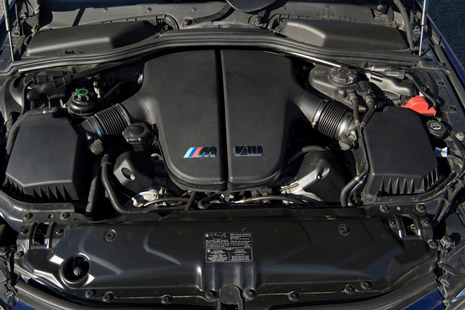
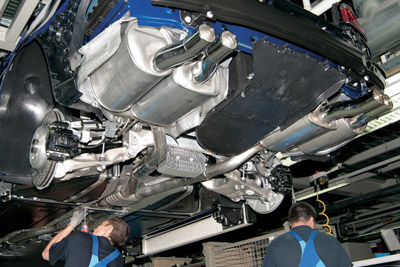
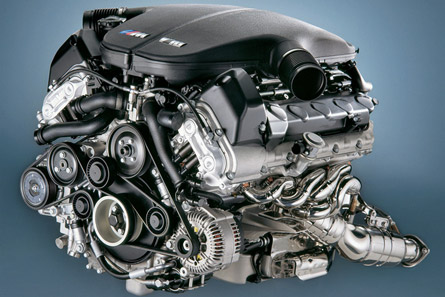
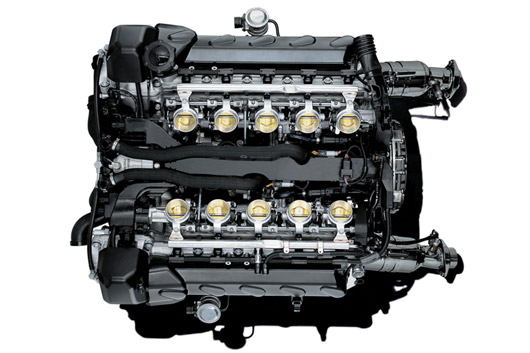
This 5.0-litre V10 produces 507 hp (373 kW) and 520 Nm (384 lb-ft) of torque. Its redline is set at 8,250 rpm, making it one of the highest-revving production V10 engines in history. A high compression ratio of 12.0:1 allows it to spin to such stratospheric heights.
The 0–100 km/h sprint takes just 4.7 seconds, while the 0–60 mph dash is dispatched in a mere 4.1 seconds. With the optional M Driver’s Package, the electronic speed limiter is raised from 155 mph to 190 mph (approximately 305 km/h).
For comparison, the previous-generation E39 M5’s 4.9-litre V8 produced “only” 400 hp. The S85 not only delivers 107 more horsepower, but raises the redline by 1,250 rpm, and adds an extra 20 Nm of torque.
However, the on-paper figures are far from the whole story. The real magic of the S85 lies in the experience.
As the tachometer needle sweeps past 6,500 rpm, you realise you are sitting in a machine that has completely transformed its character. The soaring induction roar and exhaust bellow intertwine into a breathtaking wall of sound. Keep your foot buried, and the revs charge all the way to the 8,250-rpm redline — and that sound, close your eyes, and you could easily believe you’re listening to a classic F1 V10 car screaming past.
“507 hp might sound relatively commonplace today, but that process of chasing the redline… my God, it’s almost impossible to put into words.” — UK’s Rush Magazine, 2025 in-depth review
One misconception spread among keyboard warriors also needs clearing up: it is not true that the S85 has no low-end torque. In reality, the engine’s initial throttle response is quite eager and perfectly adequate for everyday driving. But the true magic of this powerplant always lies above 4,000 rpm. Once the revs are there, the full fury and voice of the V10 are unleashed.
Furthermore, the S85 employs individual throttle bodies — ten cylinders, ten electronically controlled individual throttle bodies. This brings virtually instantaneous throttle response and precise power control, but also means that throttle synchronisation tuning is extraordinarily complex work.
The E60 M5 is based on the fifth-generation BMW 5 Series (E60) and has a kerb weight of around 4,000 lb (approximately 1,814 kg), significantly heavier than the E39 M5 that came before it.
Despite the considerable mass, the engineers managed to achieve near-perfect weight distribution. The E60 M5’s weight distribution is roughly 50:50 (some sources cite 53:47), preserving BMW’s signature chassis balance.
Out on the road, you experience an interesting contrast. The steering is precise, but somewhat softer than you would expect from an M car. The suspension leans towards a comfort-oriented setup — this is, after all, an executive saloon — but that does not mean it’s soft. The M5’s dampers provide tremendous support, and body roll is almost imperceptible through corners. It is not the scalpel-sharp driving tool that the E39 M5 was, but it delivers a different, grander, and more dramatic driving experience.
This car truly finds its stage on the motorway. Once settled into a high-speed cruise, the E60 M5 exhibits breathtaking stability. This is a machine born for the German Autobahn.
The E60 M5 debuted the world’s first 7-speed SMG III (Sequential Manual Gearbox), an electro-hydraulically actuated automated manual. It was also the world’s first 7-speed electro-hydraulic transmission in a production car, offering 11 different shift settings — six manual modes and five automatic modes.
However, the gearbox’s reputation is deeply polarised.
When driven hard, the SMG III shifts with ferocious speed and performs brilliantly. But in slow city traffic, stop-and-go scenarios, it is jerky, clumsy, and infuriating. As many seasoned owners summarise: in automatic mode, it is utterly terrible; but if you operate it manually, in its fastest setting, treating it like a clutchless manual, the SMG becomes an essential part of the car’s aggressive character.
It is also worth noting the SMG’s reliability issues and the high cost of replacing the hydraulic pump, which constitutes one of the biggest financial risks for E60 M5 owners.
Fortunately, the North American market got an additional option — a proper 6-speed manual gearbox.
This choice utterly transforms the character of the E60 M5. It turns the car from a tech-laden, slightly detached speed machine into a genuine driver’s car. Shifting a screaming V10 yourself, listening to it wail all the way to the 8,250-rpm redline, then physically slotting the next gear and doing it all over again — it’s close to a religious experience.
Sadly, manual E60 M5s are exceedingly rare. Over the entire production run, only 1,364 saloons were equipped with the manual gearbox worldwide. Combined with strong value retention, manual cars have become objects of intense desire among collectors.
The exterior design of the E60 M5, led by Chris Bangle, is among the most controversial in BMW history.
At launch, many BMW fans deemed it too radical, a far cry from the E39 M5’s timelessly elegant design. The flame surfacing design language and the boot lid design known as the “Bangle butt” were not to everyone’s taste.
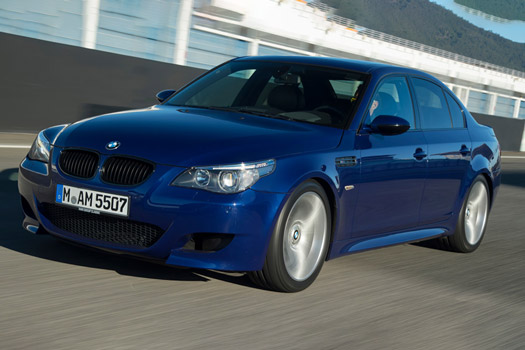
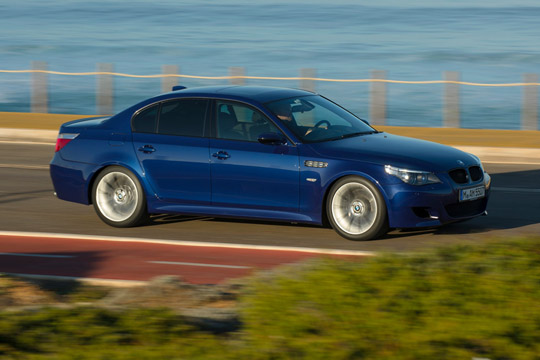
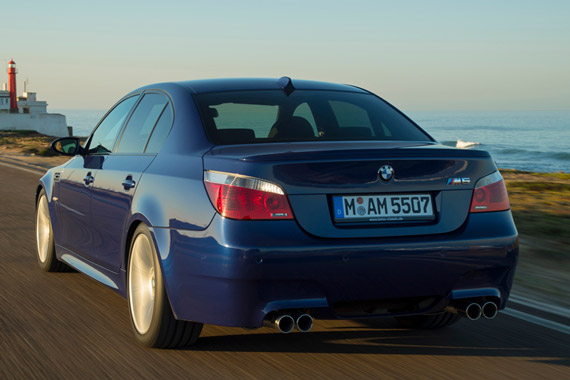
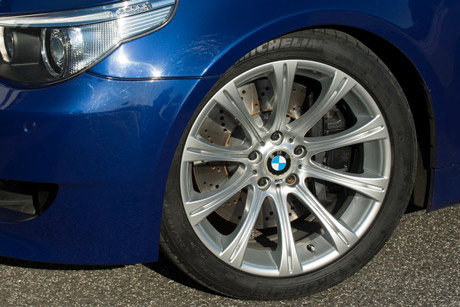
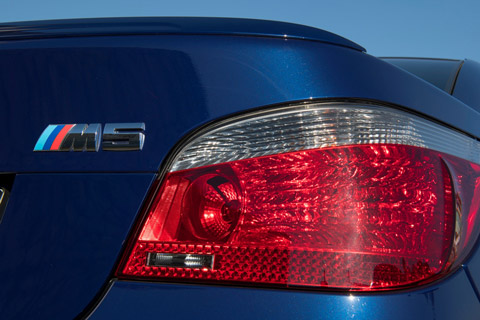
However, time is the best judge. Now, in 2025, the E60’s exterior is being increasingly reappreciated. Compared to the overly aggressive designs of modern M cars, the E60 M5 retains the early M5 tradition of being a “wolf in sheep’s clothing” — from a distance, it is not all that different from a regular 5 Series. The quad exhaust pipes and more flared wheel arches are among the few design elements that hint at the car’s identity. As some media have commented, Bangle’s design is a “perfectly cooked Bavarian sausage” — those who love it, can’t get enough of it.
The E60 generation also marked the first large-scale application of BMW’s iDrive infotainment system. The first-generation iDrive was quite controversial in its day, but through today’s eyes, this button-plus-rotary controller system actually seems refreshingly intuitive. In an era with no touchscreens and fully analogue instrument clusters, the E60’s interior exudes a deeply nostalgic mechanical character.
More significantly, the E60 M5 introduced M Dynamic Mode (MDM) for the first time. This mode allows the rear wheels to generate more slip before the stability control system fully intervenes, offering experienced drivers an ideal balance between safety net and driving enjoyment. Today, M Dynamic Mode has become one of the signature features of the BMW M family.
After extolling all the car’s virtues, we must candidly confront a reality: the running costs of an E60 M5 are substantial. In fact, it is one of the most wallet-unfriendly BMW models in history. While the S85 engine is an engineering masterpiece, it does come with a number of potential issues that require owners to be extremely vigilant.
First, rod bearing wear. This is the most serious and most well-known S85 problem. Premature wear of the connecting rod bearings can lead to catastrophic engine failure.
Second, throttle actuator failure. This problem is more insidious. Many seasoned owners on forums state that throttle actuator failure is even more frequent than rod bearing issues and often occurs without any warning, suddenly sending the engine into limp mode.
Third, VANOS system failure. The variable valve timing system can malfunction, leading to power loss and deteriorating engine performance.
Fourth, oil leaks. Oil leaks from various seals and gaskets are fairly common.
Fifth, cooling system faults. Water pump and thermostat failures can cause engine overheating.
The SMG transmission’s hydraulic pump is a well-known failure point, and replacement costs are considerable. According to owner feedback, replacing a complete hydraulic unit assembly costs around 50,000 Chinese Yuan, but this is not a permanent fix. Frequent shifting in congested city traffic can also cause the gearbox to overheat, and over time, the accumulated stress further shortens the hydraulic system’s service life.
The V10 engine has a prodigious appetite. According to real-world owner reports, an 80-litre tank of petrol can be drained in as little as 170 kilometres during hard driving. In everyday use, the range from a full tank almost never exceeds 300 kilometres.
Nevertheless, the E60 M5 is not unmanageable. For prospective owners, there are two crucial pieces of advice:
First, ignore the cheap used cars. E60 M5s on the market at very low prices are almost always ticking time bombs; these cars will nearly certainly come with neglected maintenance histories and a backlog of deferred faults.
Second, do the smart preventative modifications. The best “mod” is not some big turbo kit, but a preventative maintenance job costing less than $400 — such as pre-emptively replacing the rod bearings and throttle actuator assemblies. At the same time, choosing a car with a complete, traceable service history is the crucial first step to mitigating risk.
In the mid-2000s, Germany’s three premium brands staged an epic showdown in the super saloon segment. The E60 M5’s rivals were the Mercedes-Benz W211 E55 AMG and the Audi C5 RS6.
To put it simply: the RS6 had the most horsepower, the M5 was the lightest, and the E55 had the most brutal torque.
The W211 E55 AMG packs a 5.4-litre supercharged V8 producing 476 hp and a colossal 700 Nm of torque. Its power delivery character is completely different from the M5’s — emphasising huge low-end shove rather than a high-rev scream.
The Audi RS6 features a 450 hp twin-turbo V8 and quattro four-wheel drive, excelling in straight-line acceleration, beating the E55 by 0.6 seconds and the M5 by a full 1.4 seconds to 60 mph.
But on reliability, the verdict from Fifth Gear was crystal clear: the E55 AMG is the most reliable of the three. The E60 M5, with its SMG gearbox faults and rod bearing issues, earned the unenviable title of “least reliable.”
| Item | E60 M5 | W211 E55 AMG | C5 RS6 |
| Engine | 5.0L V10 Naturally Aspirated | 5.4L V8 Supercharged | 4.2L V8 Twin-Turbocharged |
| Max Power | 507 hp | 476 hp | 450 hp |
| Max Torque | 520 Nm | 700 Nm | 560 Nm |
| 0–100 km/h | 4.7 seconds | approx. 4.5 seconds | approx. 4.6 seconds |
| Drive Layout | Front-engine, Rear-wheel drive | Front-engine, Rear-wheel drive | Front-engine, All-wheel drive |
From its birth in 2005 until production ended in 2010, the BMW M5 E60 achieved cumulative global sales of 20,548 units, of which 19,523 were saloons and 1,025 were Touring models (E61). At the time, this set a new sales record for the M5 lineage. The United States became the largest market for the E60 M5, with more than 8,000 cars sold in North America.
In 2025, the E60 M5’s market status is undergoing a significant transformation. Classic car insurer Hagerty has included the E60 M5 in its “Bull Market List,” signalling that its collector value is expected to continue rising.
The reason is simple: a younger generation of enthusiasts is showing surging interest in this car, and the ever-improving aftermarket and modification solutions are making owning a 300+ km/h super saloon more realistic than one might think.
The market is clearly splitting. Cheap cars with a lack of documentation are often potential financial disasters, while examples with complete service records and excellent condition are steadily appreciating. A well-maintained, averagely-specced 2010 M5 is currently valued at around $25,600; concours-condition, low-mileage examples can trade for over $90,000.
Looking back at the E60 M5 from 2025, you are struck by a poignant realisation: we will probably never see a car like this again.
The all-new G90 M5 weighs 2,445 kg — over 600 kg more than the E60 — and is driven by a 4.4-litre twin-turbo V8 paired with a plug-in hybrid system. It is fast, it is efficient, but it will not scream to 8,250 rpm.
The E60 M5 represents a special era — an engineer-led era that dared to take risks. The first engine designed from scratch by BMW’s M division, the brand’s only production V10 engine, the world’s first production saloon to house a V10 petrol engine. It was born into controversy, yet proven by time to be a true modern classic.
It is not the most reliable M5, nor the fastest M5, nor even the prettiest M5. But that was never the point. This car delivers pure emotion — that engine note, the high-rev drama, the magic that turns every mundane journey into an adventure. It reminds us why we fell in love with cars in the first place.
As the global auto industry pivots en masse towards electrification, the E60 M5 stands as the swan song of an era. Its very existence tells those who come after: once upon a time, BMW put an F1 V10 engine into a four-door saloon, successfully mass-produced it, and sold it to the world. That audacity and madness can never be replicated in the electric vehicle age.
If you have the means to afford running an E60 M5, right now might be your last chance to get onboard. This is a machine capable of defining your automotive life. And such a machine will not come again.

