


2026 Hyundai Palisade Hybrid Review: A Smarter Three-Row SUV for Families
You may have encountered this situation: waiting in a long line at a gas station, and when it’s your turn, you find that the usual 95-octane gasoline is out. Or maybe you just want to save a bit of money during these times of high fuel prices. A question suddenly pops into your head: “Is it really a problem to mix premium gasoline and regular gasoline together?”
The answer is simple. If your car is designed to run on regular gasoline, occasionally mixing in premium gasoline won’t cause a problem. But the reverse—if your car requires premium gasoline and you mix in regular gasoline—then problems arise. Mixing them over the long term is even more fraught with hidden dangers.
Next, we’ll dive into the principles, risks, and correct usage. It all starts with the real meaning of those gasoline grade numbers.
Many people have a critical misconception. They think the higher the grade number, the cleaner, purer, and more powerful the gasoline. This notion is completely wrong.
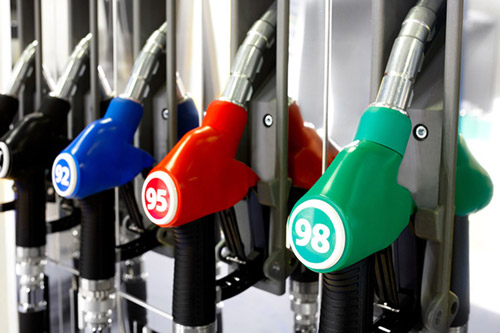
The gasoline grade does not indicate quality, cleanliness, or energy density. It represents only one performance indicator—octane rating. The octane rating measures the gasoline’s knock resistance.
What is knock resistance? Simply put, it is the gasoline’s ability to resist spontaneous ignition and knocking inside the high-temperature, high-pressure cylinder.
Isooctane is the “main force” resisting knock. The higher the proportion of isooctane, the higher the octane rating, and the less likely the gasoline is to ignite on its own before the spark plug fires. As long as you fill up with China VI B gasoline from a legitimate station, the cleanliness level is the same across all grades and has nothing to do with the octane number.
The base components of gasoline are exactly the same, so the two will dissolve completely into each other. When you mix premium and regular gasoline, no sediment will form, and there will be no separation into layers. What you end up with is simply a tank of gasoline with an intermediate octane rating.
For example: you have half a tank of 92-octane left, and you fill the rest with 95-octane. After mixing, the octane rating you get will be roughly around 93.5.
Will an occasional mix immediately destroy the engine? No.
That’s because modern cars are very smart. The engine is equipped with a component called a knock sensor, which works in conjunction with the ECU (Engine Control Unit).
If the octane rating changes after mixing, the ECU will immediately get to work. It will automatically fine-tune the ignition timing advance to suppress the risk of knocking and ensure the engine runs normally. You will barely notice this process.
Core conclusion: For short-term mixing, the ECU can serve as your guardian angel. However, it is only providing an emergency fix, not optimizing your engine.
If you mix frequently, the consequences become serious. The ECU will fall into confusion, repeatedly adjusting ignition parameters, causing the engine’s operating point to drift. Over time, both fuel consumption and power will be affected.
Even more frightening are the following two extreme scenarios:
Don’t listen to the tips from so-called “veteran drivers,” and don’t blindly believe “more expensive is better.” The most authoritative answer is right on the inside of your fuel filler cap, or in your owner’s manual.
If you see:
Summary: Mixing premium and regular gasoline is not a big problem for short-term emergencies—the ECU will back you up. But in the long run, it’s a bad habit that you pay for with repair costs. Smart drivers follow only one principle: fill up according to the fuel filler cap’s instruction, rather than paying for peace of mind.

