


2026 Hyundai Palisade Hybrid Review: A Smarter Three-Row SUV for Families
Winter Temperatures Plunge, Road Conditions Deteriorate – Tires Become the Most Critical Factor Affecting Driving Safety
Winter temperatures plunge and road conditions deteriorate. This makes tires the most critical factor for driving safety. Tires provide the only contact point between your vehicle and the road. Their condition directly affects the safety and lives of you and your passengers. You may have waxed the car body. You may have changed to antifreeze engine oil. But have you truly paid attention to the health of your tires?
This article compiles a comprehensive winter tire protection guide for you. These maintenance tips can help you safely navigate the cold season. They apply whether you live in North America, Europe, or Asia. Furthermore, Chinese automobiles now sell globally. More international car owners drive Chinese-made vehicles. Understanding the maintenance essentials for Chinese tire brands has become equally important.
Cold weather significantly alters the physical properties of tires. As the temperature drops, the air inside the tires contracts. For every 10 degrees Celsius decrease in temperature, tire pressure drops by about 0.1 to 0.2 bar. This means your tires may unknowingly be in an underinflated state.
Simultaneously, rubber hardens and becomes brittle in low temperatures. Standard all-season tires lose substantial flexibility below 7 degrees Celsius. Their grip decreases sharply. If you use high-performance summer tires—such as Michelin Pilot Sport 4S or Pirelli P Zero—these tires do not suit long-term use below 7 degrees Celsius. Low temperatures impair their grip. They also risk micro-cracking or even freeze-cracking the rubber.
You cannot overlook tire aging in winter. Even if tread remains relatively deep, oxidation degrades the rubber compound in tires used for 4 to 6 years. The cold winter temperatures only accelerate this process further.
Tire pressure management is the primary task for winter tire protection. Tire pressure drops much faster in winter than in other seasons. Check tire pressure at least once a month. Ideally, check it once a week. Check the tires when they are cold. This means the vehicle has been parked for at least one hour.
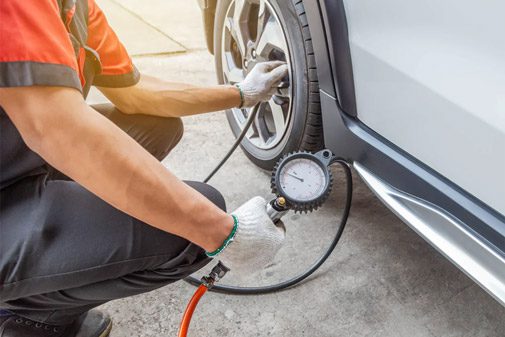
Experts from Nokian Tyres recommend a specific winter inflation level. Inflate tires to 0.2 bar (20 kPa) above the manufacturer’s recommended value. This compensates for pressure loss caused by low temperatures. You can find the recommended tire pressure on a label. The label sits on the driver’s side door frame or inside the fuel filler cap. Follow the vehicle manufacturer’s recommended values strictly. Do not use the maximum pressure value on the tire sidewall.
Tread is the critical structure for expelling snow and water. It provides essential grip. Winter demands stricter tread depth than summer. The legal minimum tread depth is 1.6 millimeters. However, experts unanimously recommend a winter tread depth of at least 4 millimeters. When tread depth nears this critical threshold, anti-skid capability drops dramatically on snow and ice.
Pirelli similarly notes a key guideline. Consider tire replacement when tread depth falls below 4 millimeters. Do not wait until the legal limit. Use a coin for a quick tread depth check. Insert the coin upside down into the tread groove. If you see too much of the coin, the tire needs replacement.
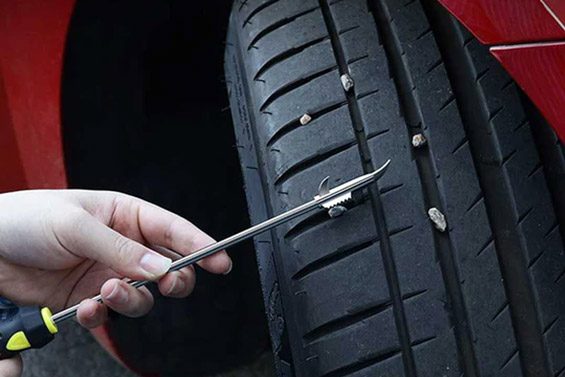
Before winter trips, walk around the vehicle. Carefully inspect the tire sidewalls and the contact surface. Focus on these issues: bulges, cracks, cuts, or puncture marks from sharp objects. Low temperatures decrease rubber toughness significantly. This makes tires more susceptible to impact damage. Existing minor flaws may also enlarge. This increases the risk of a blowout.
If you find a bulge on the sidewall—even a slight one—the internal cord layer has fractured. Replace such a tire immediately. You cannot repair it for continued use.
Ice, snow, gravel, and debris can lodge easily in tread grooves. These foreign objects damage the tire surface. They also reduce the tire’s ability to channel water and snow. After each drive, use a stiff brush or specialized tool. Clean the tread grooves to keep the pattern unobstructed. If ice or snow freezes hard, pour room-temperature water gently onto the tread to melt it. Never use hot water. Excessive temperature differentials could damage the rubber.
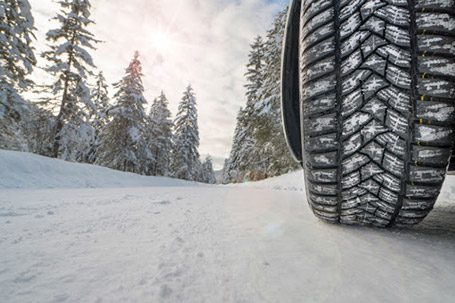
Winter tires (or snow tires) use specialized rubber compounds and tread designs. They maintain flexibility in low temperatures. They provide snow and ice grip far superior to all-season tires. Consider switching to winter tires when temperatures stay below 7 degrees Celsius for extended periods.
When purchasing winter tires, look for the “Three-Peak Mountain Snowflake” (3PMSF) symbol. This symbol shows a mountain peak with a snowflake inside. The marking certifies that independent testing has verified the tire’s winter performance. If you cannot change to snow tires right away, install snow chains as an effective alternative. Keep speed under 30 km/h when using snow chains. Avoid sudden acceleration and hard braking.
Thoroughly clean summer or all-season tires you have removed. Remove road salt and brake dust. Store them in a cool, dry, dark environment. Store tires vertically to prevent deformation.
Good driving habits protect tires in the simplest, most effective way. Winter roads are slippery. Tire grip is inherently compromised. Field tests by Nokian Tyres indicate a significant wear difference. Drive-wheel tires can wear up to four times faster than non-drive-wheel tires in winter.
To protect your tires, follow these practices. Avoid sudden acceleration, hard braking, and sharp steering inputs. Anticipate road conditions and decelerate slowly. Maintain a longer safe following distance than usual. Perform regular tire rotation to balance wear. Nokian Tyres recommends rotating tires front-to-rear about every 10,000 kilometers driven.
International travelers must understand winter tire regulations in different regions.
Europe: Regulations vary by country. In France, from November 1st to March 31st each year, 34 mountainous provinces mandate winter tires or snow chains. Germany has no fixed mandatory period. However, drivers must use tires with the “3PMSF” symbol during winter weather conditions. Sweden requires them for passenger cars from December 1st to March 31st. Denmark implemented new regulations effective July 2025. They require tires suitable for snow, ice, and slush during winter. In Luxembourg, winter weather demands winter tires or all-weather tires. Violators face a fine of 74 euros.
Japan: Except for Okinawa Prefecture, all snowy regions nationwide require vehicles to have snow tires or carry chains. Driving on snow-covered or icy roads with standard tires violates the law. The penalty is a fine of up to 7,000 yen.
We must mention an important industrial trend—the rapid rise of China’s tire industry. Over the past 30 years, China’s global tire market share has grown from zero to about 40%. China has become the world’s largest passenger car tire exporter. It accounts for about 17% of the global total by export value.
As Chinese automobiles sell worldwide, Chinese tire brands gain more recognition from international consumers. From January to September 2025, China’s tire exports reached 6,390,800 tons. This marks a 4.88% increase over the previous year. Chinese tire companies actively expand production capacity globally. At least 27 large-scale new factories are currently in planning or construction. About 60% of China’s passenger car radial tire exports go to “Belt and Road” countries.
For global car owners, this means more cost-effective winter tire options exist. Many Chinese tire brands now achieve world-class performance in snow and ice testing. Regardless of your vehicle’s origin, proper tire selection and correct maintenance remain the keys to winter driving safety.
Winter tire protection is not a one-time task. It requires a continuous process throughout the cold season. Please remember: check tire pressure frequently. Monitor tread depth. Clear foreign objects. Drive smoothly. Change tires at the appropriate time. Your safety depends on your vehicle’s mechanical performance. But it also depends on whether these four black rubber rings are in optimal condition. Spending an extra minute checking tires before each drive may be your most worthwhile safety investment.
The global automotive industry has achieved deep integration. You may drive a traditional European or American brand. Or you may drive an increasingly global Chinese brand vehicle. In either case, the fundamental principles of tire maintenance remain universally applicable. Practice good winter tire protection. Ensure every winter journey is peaceful, warm, and safe.

