


2026 Hyundai Palisade Hybrid Review: A Smarter Three-Row SUV for Families
The wave of electrification is sweeping in, unstoppable. At the same time, Chinese automotive brands are rising comprehensively, reshaping the market landscape. In this transformation, the Polestar 4 stands out with its bold design and outstanding performance. It is not just another all-new electric SUV. It is an important bellwether for the future development of electric high-performance SUVs.
Before diving deep into the vehicle itself, let’s first look at the brand and market background behind it. Polestar is demonstrating unprecedented confidence and strength. Data shows that in the first quarter of 2026, Polestar achieved its best-ever start to a year. Its global retail deliveries reached 13,126 vehicles, a 7% increase compared to the same period last year. This continues the strong momentum of its 34% full-year sales growth in 2025.
Meanwhile, the retail network is expanding at a staggering pace. By the end of the first quarter of 2026, Polestar had 230 retail locations worldwide. That is a nearly 50% increase from the 154 locations a year earlier. By the end of 2026, this number will increase to around 250. Polestar has also set a full-year 2026 sales growth target in the low double digits and plans to expand its retail network by approximately 30%. These moves fully demonstrate that the brand is actively positioning itself for even more intense market competition.
It is worth noting that Polestar is a Swedish-designed automaker controlled by Geely. Its success also reflects a broader global trend. Today, the overseas sales of Chinese automobiles are no longer limited to traditional export trade. It is transforming into a comprehensive “ecosystem going global” that encompasses technology, standards, and brands. Polestar is precisely leveraging China’s electric vehicle industry chain advantages and digital capabilities, combined with its European design heritage, to create highly competitive global products. The Polestar 4 is the latest masterpiece under this “European design, Chinese intelligent manufacturing” strategy.
In terms of exterior design, the 2026 Polestar 4 absolutely refuses to be ordinary. It boldly transplants supercar design concepts into a mainstream electric SUV. It adopts an aggressive fastback profile, with smooth and sharp lines. The sharp LED Thor’s Hammer headlights and the full-width taillights together create a futuristic feel straight out of a sci-fi movie.
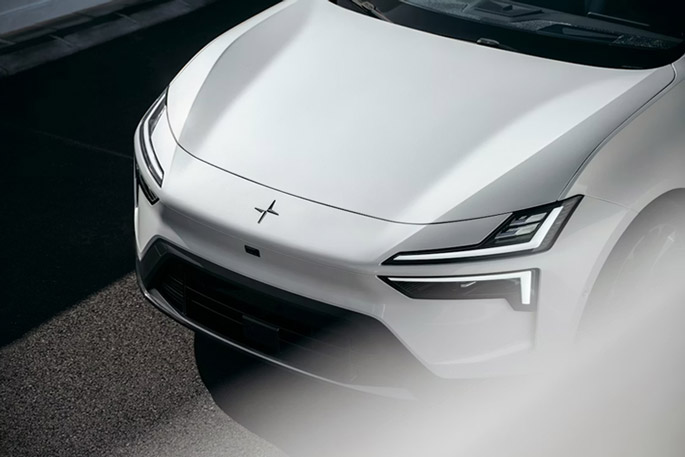
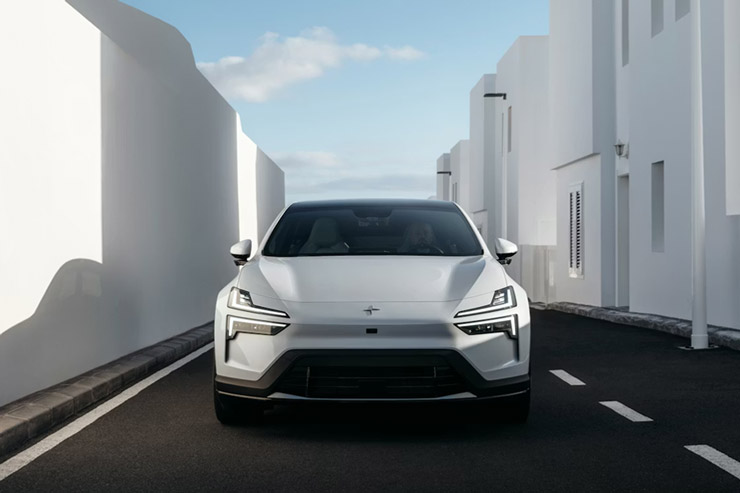
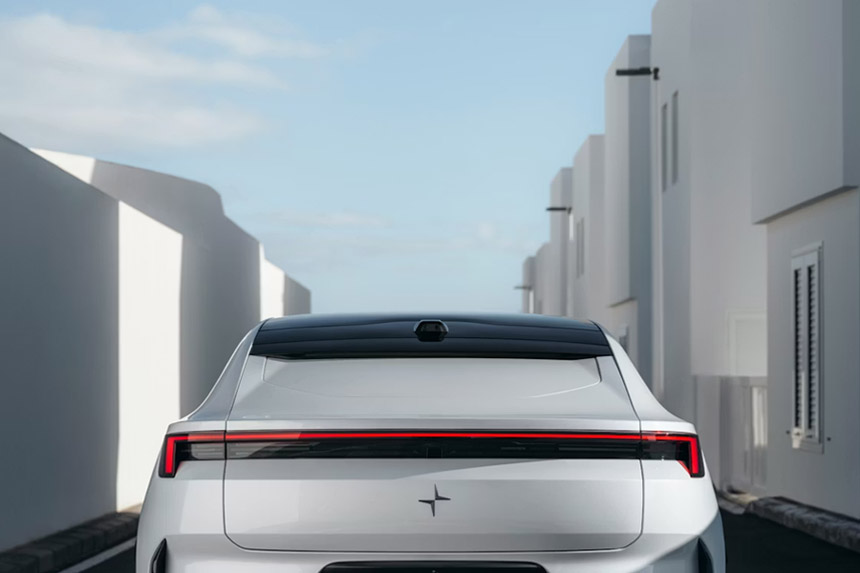
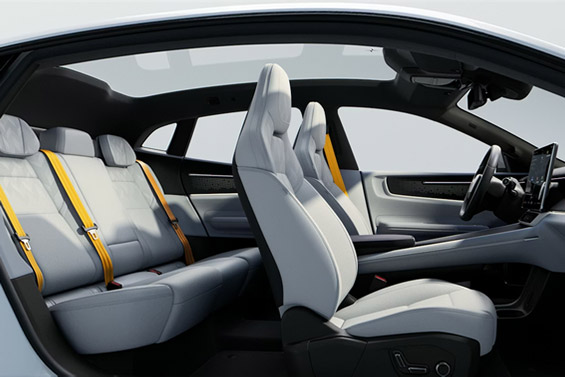
However, the most eye-catching and controversial design element is undoubtedly the elimination of the traditional rear windshield. In its place is a high-definition camera that streams a real-time video feed of the rearward road situation to the digital rear-view mirror inside the car. The designers’ goal was to achieve a lower, more dynamic roofline without sacrificing rear headroom.
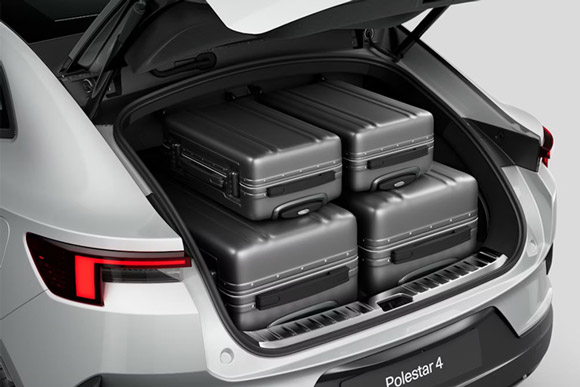
Is this design practical? Media reviews are divided on this question. Some media outlets believe that in actual driving, the driver hardly notices the absence of the rear window. However, other reviews point out that this is a “quirk” that takes a very long time to get used to. But undeniably, this no-rear-window design gives the Polestar 4 extremely high recognizability in the SUV market where models tend to look alike.
In terms of powertrain, the Polestar 4 offers two options. The entry-level version features a rear-mounted single motor producing 272 horsepower and a 0–60 mph acceleration time of 6.9 seconds. The dual-motor performance version we are focusing on testing, however, is a true beast. It boasts 536 horsepower and 506 lb-ft of formidable torque.
Real-world test data confirms its prowess. In MotorTrend’s testing, this 5,226-pound SUV sprinted from 0 to 60 mph in just 3.4 seconds, with a quarter-mile time of 11.7 seconds. This result is even 0.2 seconds quicker than the more expensive Porsche Macan 4S Electric, and the quarter-mile is also 0.2 seconds faster. This breathtaking performance is ample proof of its superior power capabilities.
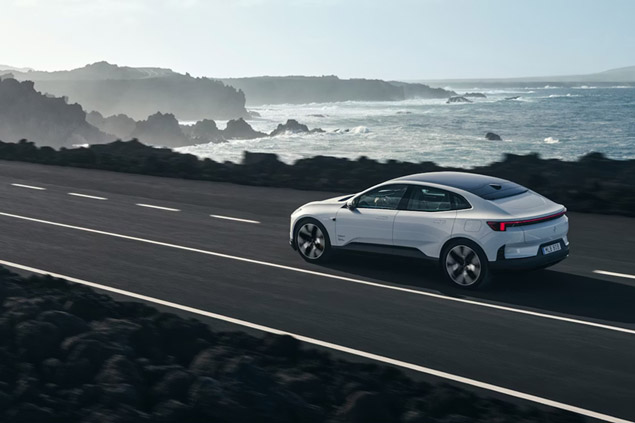
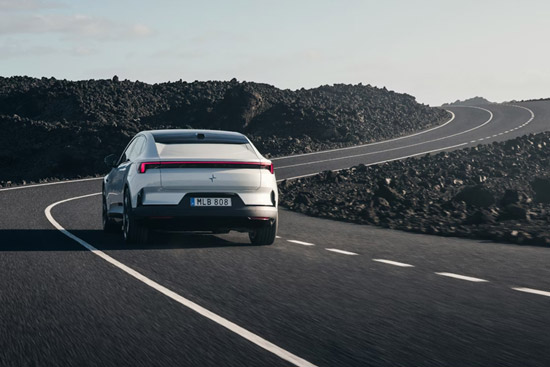
Furthermore, the Polestar 4’s handling performance on the track is equally commendable. In the figure-eight test, it achieved an excellent result of 23.7 seconds and an average lateral acceleration of 0.88 g, again surpassing the Porsche Macan 4S (24.4 seconds / 0.82 g). Even more reassuring is its braking performance: the stopping distance from 60 mph to a complete halt is only 111 feet, and it exhibits excellent fade resistance.
The power performance is outstanding, so what is the driving experience like? The Polestar 4 launches fiercely but not brutally. Its acceleration process feels “tame and controllable.” It drives like a true GT car, with a stable and sustained power delivery. Of course, some media outlets feel that its formidable performance does not effectively translate into driver sensory excitement. Additionally, because the performance version rides on 22-inch large wheels, its ride quality may lean toward the firmer side.
For an electric vehicle, performance and range are equally important. Official EPA (Environmental Protection Agency) data shows that the single-motor long-range version offers a full-charge range of 310 miles (about 499 km). The dual-motor version offers a range of 280 miles (about 451 km), and the more performance-focused performance version has a slightly shorter range of 255 miles (about 410 km).
To better reflect real-world usage scenarios, one foreign media outlet conducted a long-term test. Over three months, the test vehicle’s actual measured range stabilized at 450–452 km. While this figure falls short of the 590 km WLTP rated value, it performs well within its class.
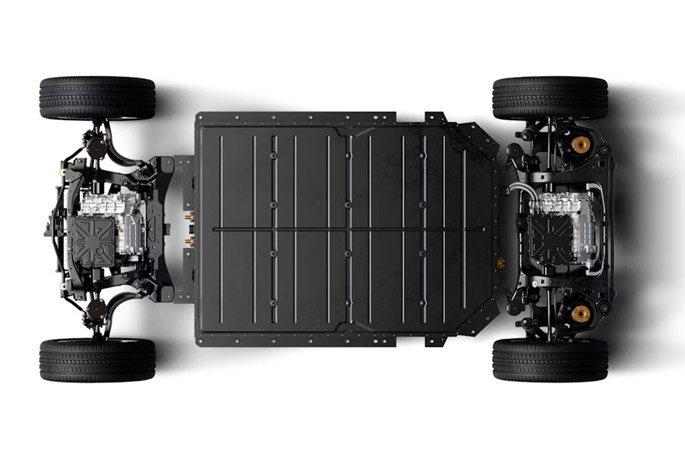
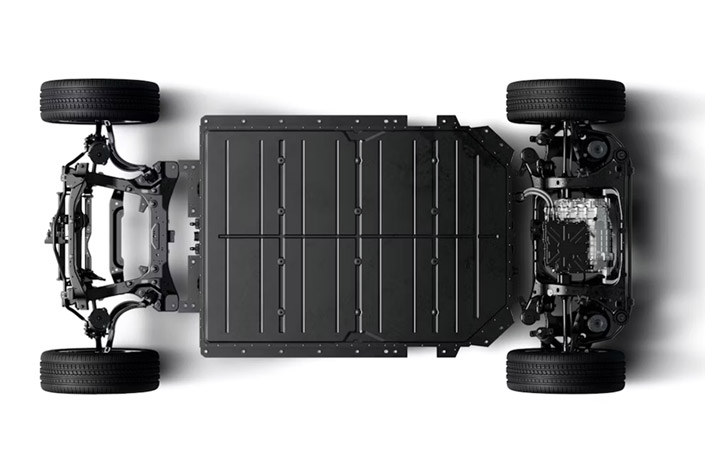
Fast-charging capability is equally critical. All versions are equipped with a 100 kWh large battery pack. It supports DC fast charging up to 200 kW, enabling a charge from 10% to 80% in just 30 minutes. This means a brief stop during a long road trip can quickly bring it “back to full vitality.”
Practicality and value are also worth considering. The no-rear-window design yields better rear headroom, but some users have criticized that the rear door openings are not wide enough, affecting ingress and egress. As for price, the Polestar 4 starts at $56,400 in the U.S. market. This price point is precisely positioned between the Tesla Model Y and the Porsche Macan, highlighting its market positioning of “high value, high performance.”
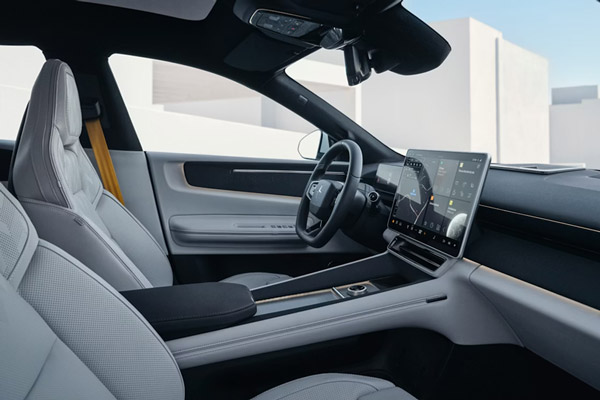
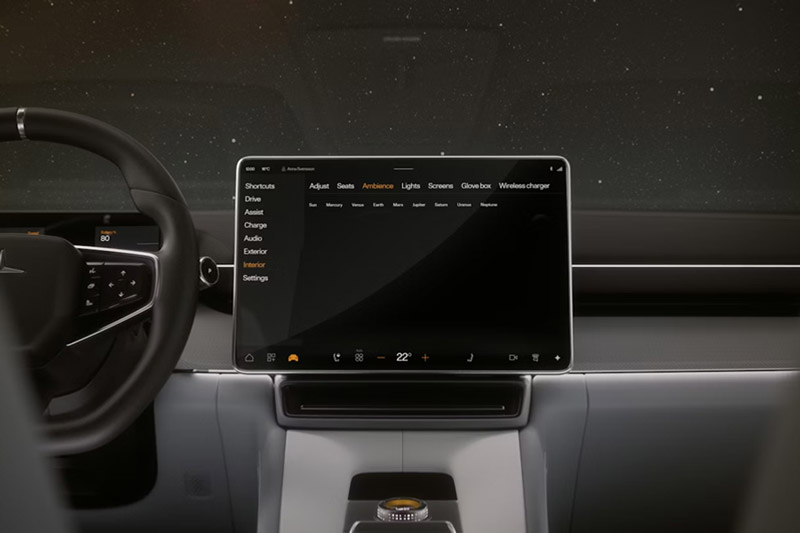
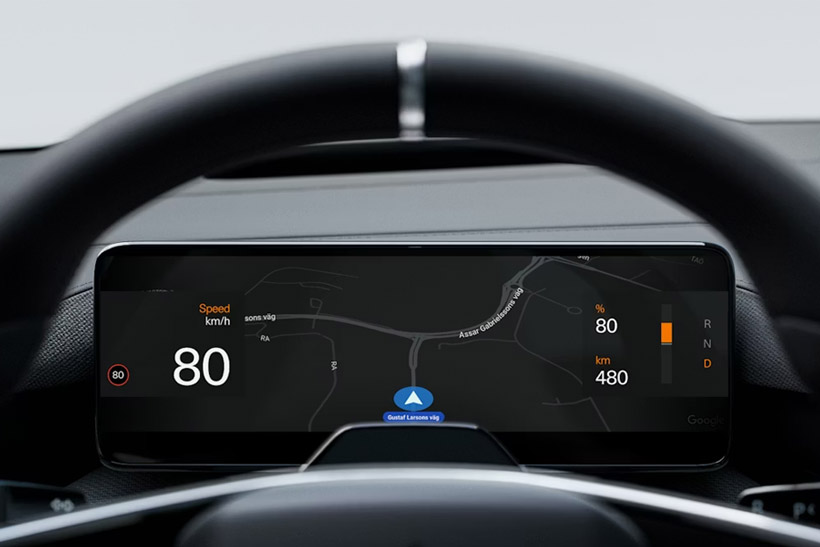
So, what kind of vehicle is the 2026 Polestar 4 exactly? It is a car with a distinct personality, and both its strengths and weaknesses are very pronounced. Its strengths are impressive: a highly futuristic design, formidable straight-line acceleration, track handling that surpasses its rivals, and a tech-rich Scandinavian-style interior.
However, its weaknesses are equally evident. The no-rear-window design is destined not to please everyone. Its handling experience pursues stability and efficiency but lacks the sense of communication found in traditional performance cars. Moreover, its main competitors are also very strong.
Comparing with the Tesla Model Y Performance:
Nonetheless, the Polestar 4 still represents the future direction of electric high-performance SUVs. It dares to break conventions and try new designs. It perfectly combines electric vehicle technology originating from China with European chassis tuning and design style. The Polestar 4 is undoubtedly an exciting signal in this dynamic era of electric vehicles.

